Tag Archives: #ttot
10 Food Wonders from the Japanese World
We have all heard that dream from the avid travel bug-bitten nomad; “I want to eat my way through [insert far away country here]”. Most of the time these places include the pastas of Itally, or flatbreads of France, or in my case, the unusual dishes of Japan.
I hope this sparks some interest in the culinary marvels of Japan, and inspires you to try a few new dishes.
Here are 10 uniquely Japanese foods I tried;
- Sushi
Sushi isn’t only available in “raw fish”. Sushi, which says more about the style the food is presented in, is the wrapping of the contents in seaweed. It is the ever popular seaweed wrapped rice that the culture is famous for. Available with a wide array of fillings from eel to octopus, the contents of these bite-sized delights are diverse. But don’t get this mixed up with Sashimi. THIS is raw fish. With fish markets available in nearly every town, the custom of eating raw fish is still a large part of the culture. I have even found places where you can get a bowl of the delicacy, douse with some soy sauce, and enjoy.
2. Dango
This rice based desert is a rice-paste balls, dressed in a syrup like topping, and served on a stick.
- Miso Soup
The broth-y soup is rich from the flavors of the Japanese mushroom and Dankom, (a potato like vegetable, whose sliced form resembles swiss cheese in look.) often served as a form of “noodle soup”, it reminds me of a chicken noodle soup, if chicken noodle soup was made with strange (yet delicious) veggies.
- Yakisoba
Yakisoba has become a staple of my diet. The fried noodle dish was introduced to me at a festival, but is available at most grocery stores. (Out of al the places I have been, Japan has had the best street food so far.) The pasta, turned brown with the strong, aromatic, sauce, is mixed with cabbage and carrot and seasoned with a garnish of pickled ginger.
- Takayaki
Think ‘Octopus fritter’, (a ball of dough mixed with cooked octopus, and baked til perfection.) This, like the Yakisoba were introduced to me through festival street food. The one-and-a- half inch diameter balls are served with a glaze that could be compared to that of a barbeque sauce with a teriyaki ‘essence’.
- Kaki
Kaki, which resembles a peach on a tree, but when picked looks closer to a not-yet-ripe-tomato, is a small fruit that tastes a bit like a melon mixed with a peach.
- Taiyaki
Named after the fish shape that it is cooked in, Taiyaki is a waffle like breading filled with Hashi, a sweet bean that is commonly eaten for desert, and eaten for desert. This same fish shape is also used for icecream sandwiches.
- Yatsuhashi
Kyoto is known for its Yatsuhashi and it is common in gift stores and packaged to pick up for you souvenir needs. The type that I tried was in small, doughy triangles, unflavored, and flavored with green tea. Inside, they contained a dollop of Hashi, for the sweet, soft texture.
9. Nato
This smelly bean dish, which is easy to come by and acquired in taste, may not make the list of all time favorite foods, but I would classify it as “interesting”. The beans were sticky and smelled ripe, but with the addition of soy sauce, mustard and spring onion, it was a truly unique texture, with an almost ‘cheese’ flavor.
10.Umeboshi
A fomented, sweetened plumb ‘candy’ that comes in two types; a firm small plum that is salted and has a texture of a pickled olive, and a soft, (almost mushy) sickly strong, plumb. I tried both, and in all my adventures with cuisine (and I am NOT a picky eater) I still had troubles swallowing that 2nd one.
Authors edit – Orriginally #9 was Meat on a stick (posted below) but was changed after the very recent addition of Nato, which was further from anything I had back in western culture. Meat on a stick, at 2nd glance, is a little more widespread, and I felt it would be worth substituting for a more significantly cultural dish.
- Meat on a stick
I am not sure why, but there is a large amount of fried chicken on a shish-kabob spear at every festival I go to. Here in Tomioka, their signature cuisine is a fried slab if fish, battered and shish-kabobed, usually with some form of entrails.
A quick look at a future project
Kanra; The hidden gem of Gunma
Kanra:
The area holds onto its history as the safe-haven for samurai after they were ‘disbanded’. Coming from Tokyo, Osaka, and Kyoto, they were able to use the rural environment to continue on with their horses and arts, which has made the area very rich for authenticity.To this day, the area embraces its martial arts of Judo, Kyudo (archery), Kendo (staff fighting) and Kendu (sword).
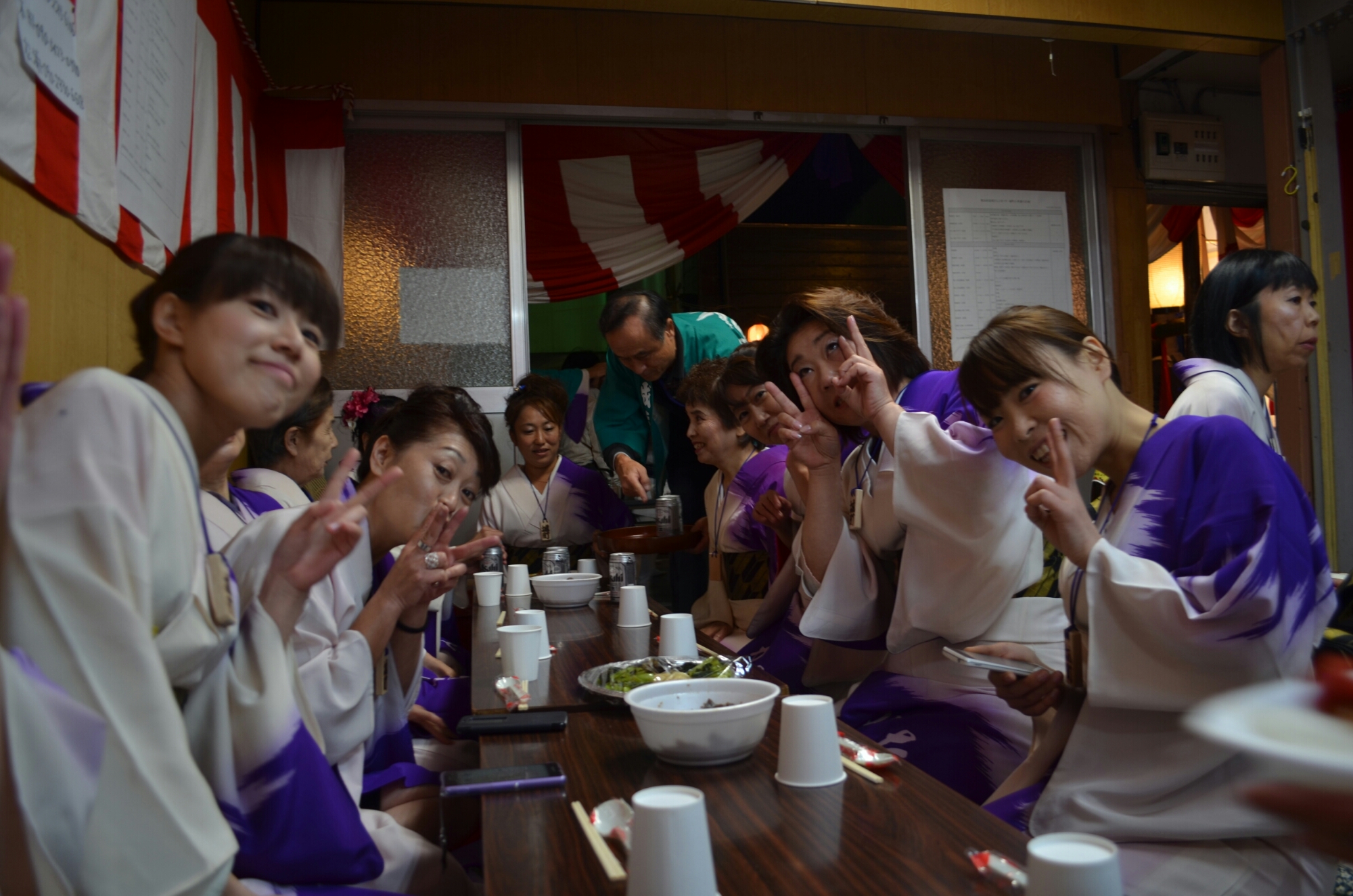
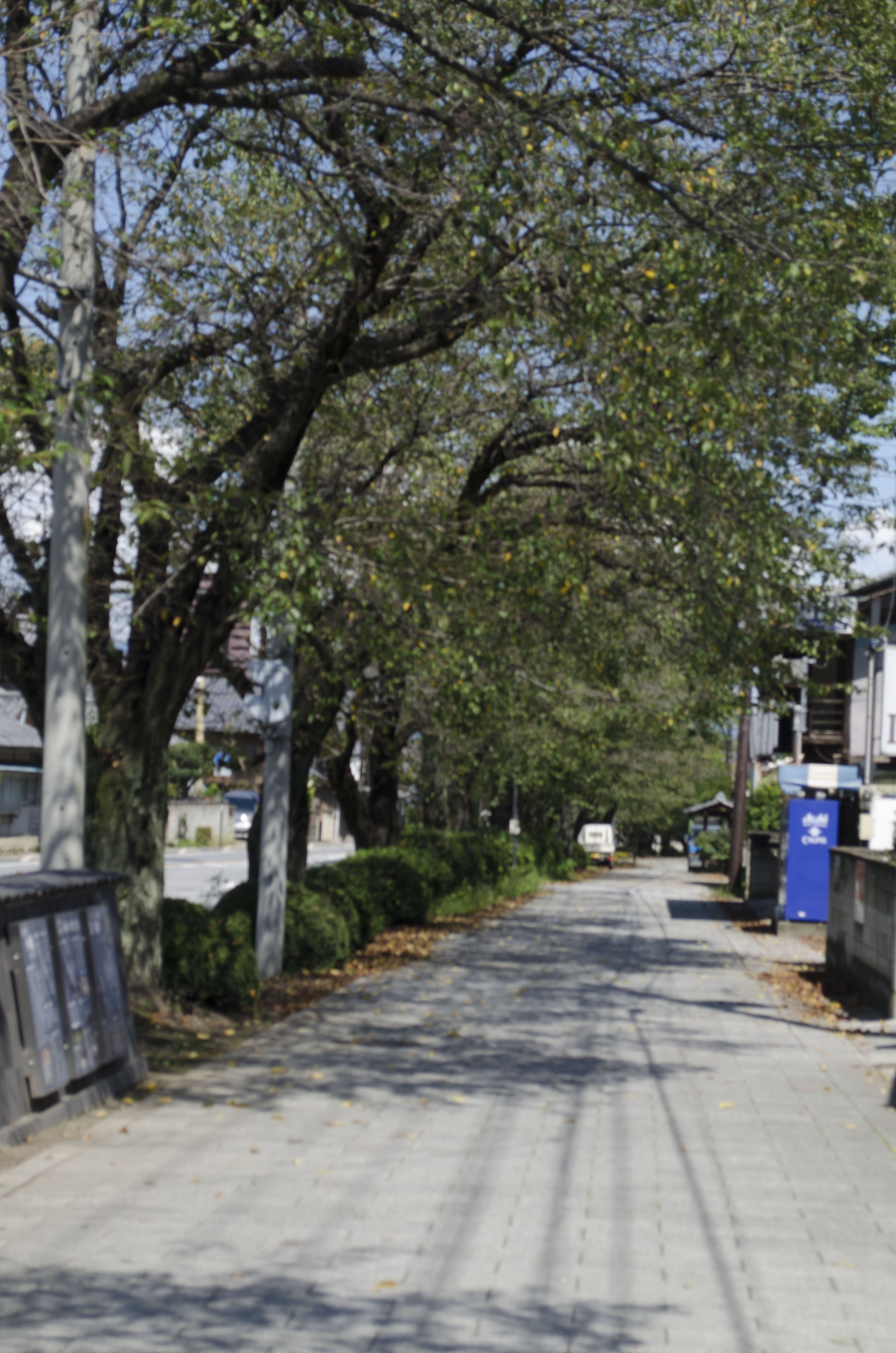
About a 30 minute bike ride from Tomioka is the small town of Kanra. Shougun (a Samurai chief), had lived in the small town, and his old house is marked with a plaque outside the front gate. In the spring, during cherry blossom season, there is the Kanra samurai parade. This free event is held along the main road, flanked by cherry blossoms, and contains the authentic view of the samurai. Participants will dress to-the-nines in their samurai garb, women will dawn kimonos and paint their faces, and they will take to the cherry blossom lined road.
Cherry blossom trees line the sidewalk in Kanra.
Kanra also houses many temples, shrines and gardens that are not to be missed. When my co-worker brought me into the small town, our first stop was a large temple that we saw as we entered the town. Hiking upto the building, we ventured up an over gown path to the top of the mountain behind the temple. Capped with a small seating area, stage and a few tree’s lining a meadow, the lush overlook provided a wonderful view of the surrounding towns and mountains.
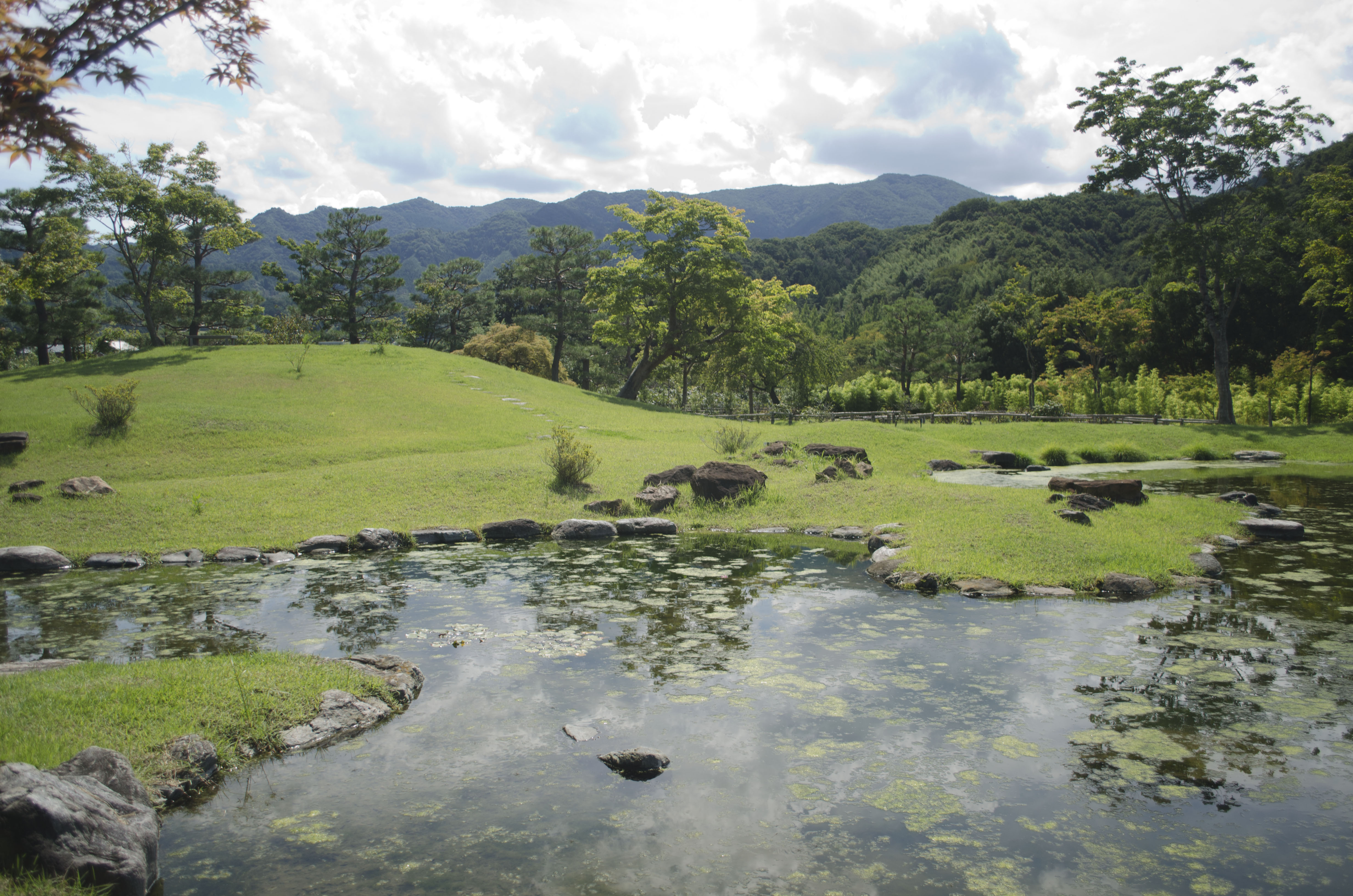
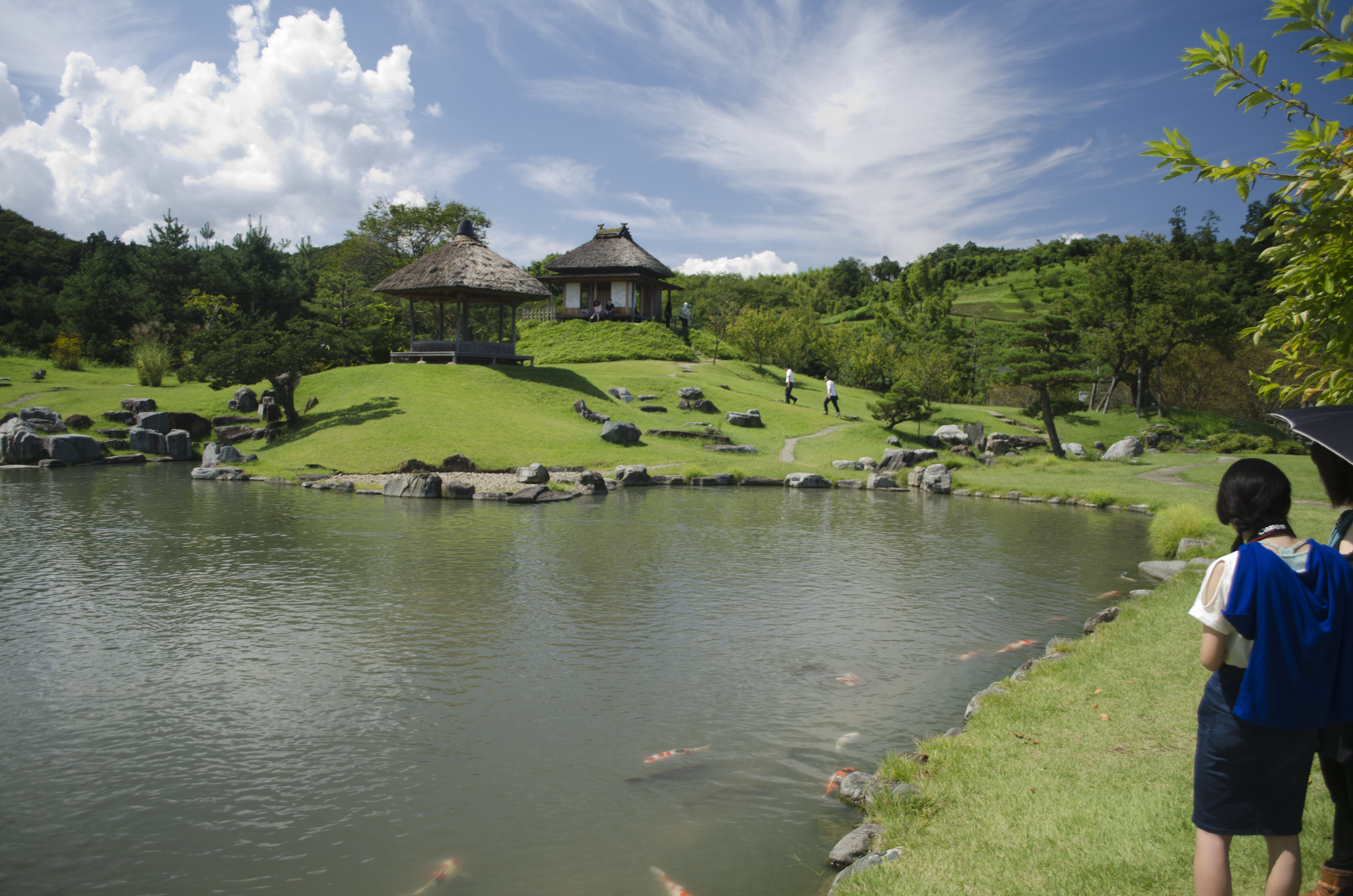
Our next stop was the gardens in the center of Kanra. The 300 yen ($3) entry price is well worth it to see the rolling green hills, and lounge pond side to large Koi fish. In the adjacent museum that shows what the Samurai houses used to look like, you can buy a bag of Koi food for 100 yen ($1). I highly recommend doing this.
The gardens in Kanra.
Wondering around the garden, we came across the local Kyudo club in their practice. On the other side of the garden from the museum is an archery range, which at the time was filled with archers dressed in traditional clothing, practicing their technique.
Kyudo, unlike western archery, draws the arrow behind the head to sight down the arrow shaft.
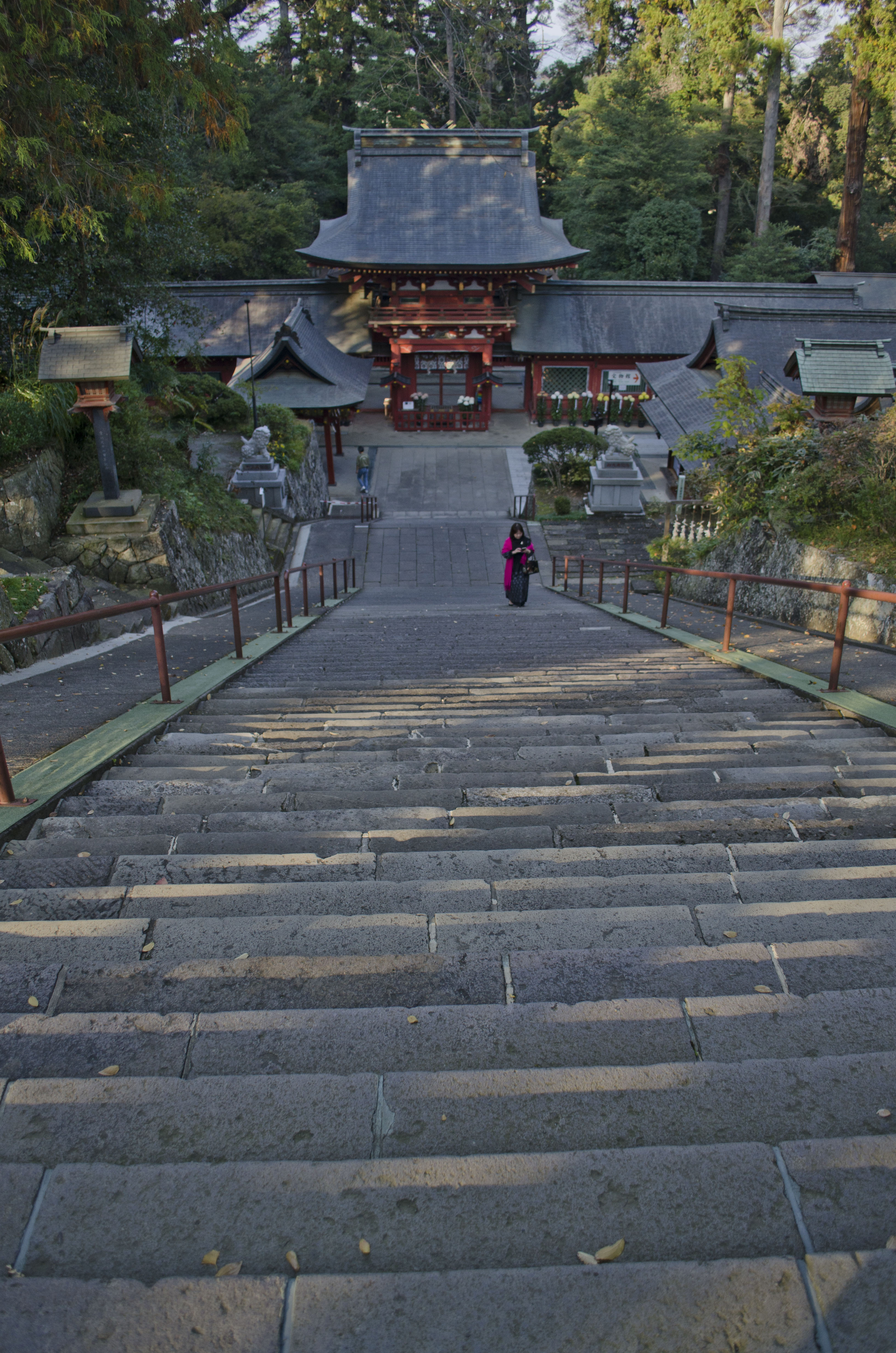
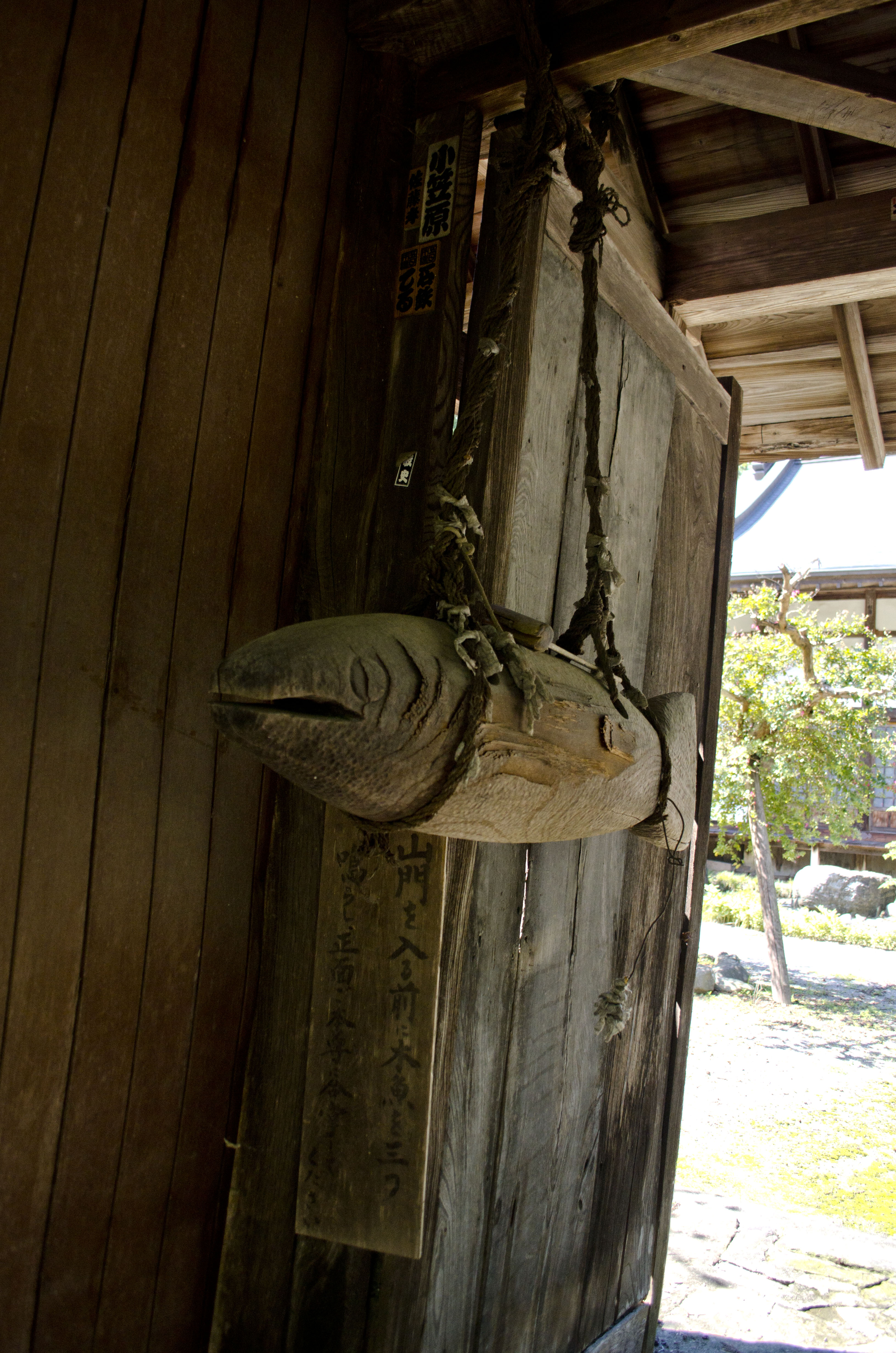
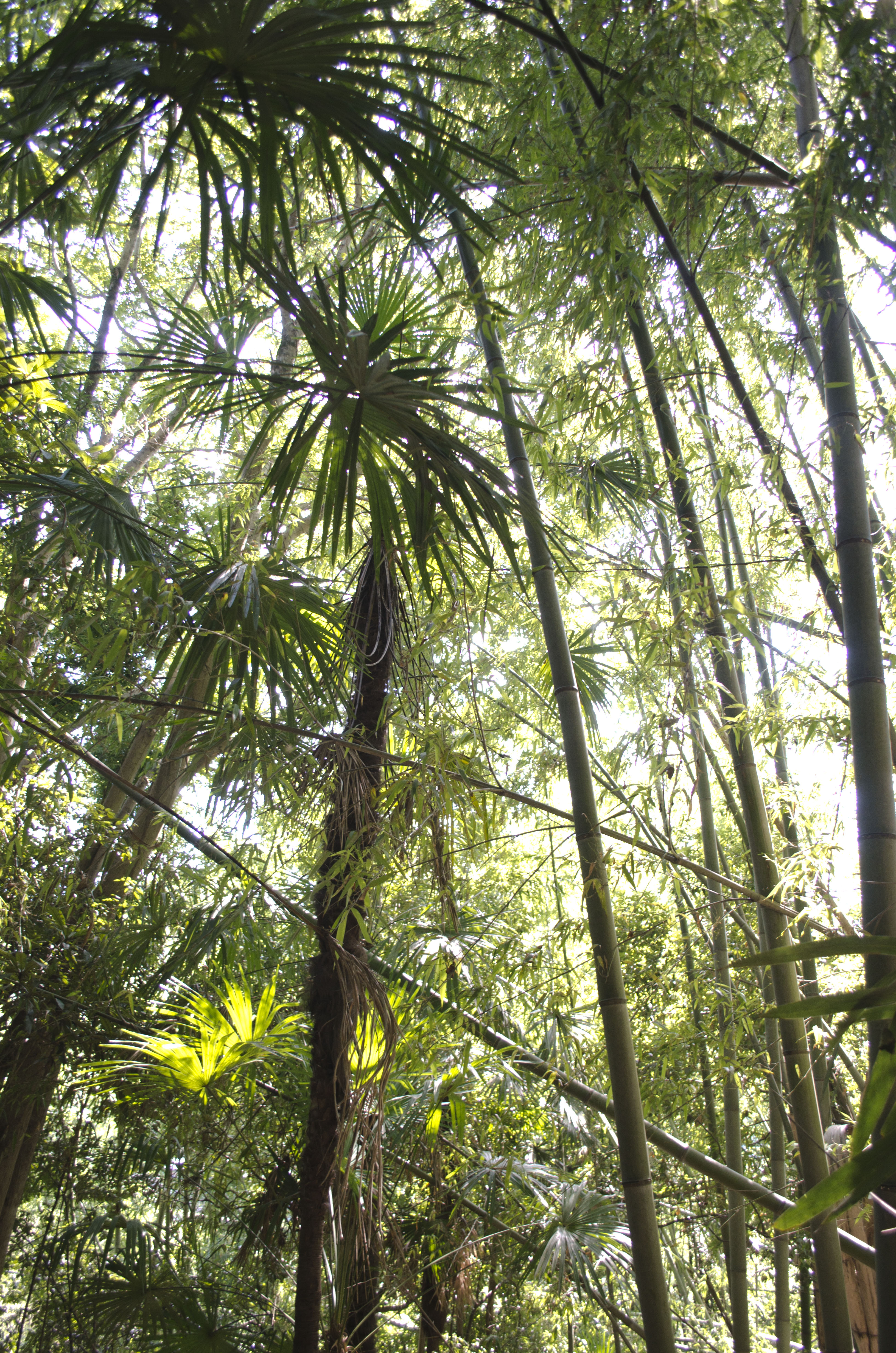
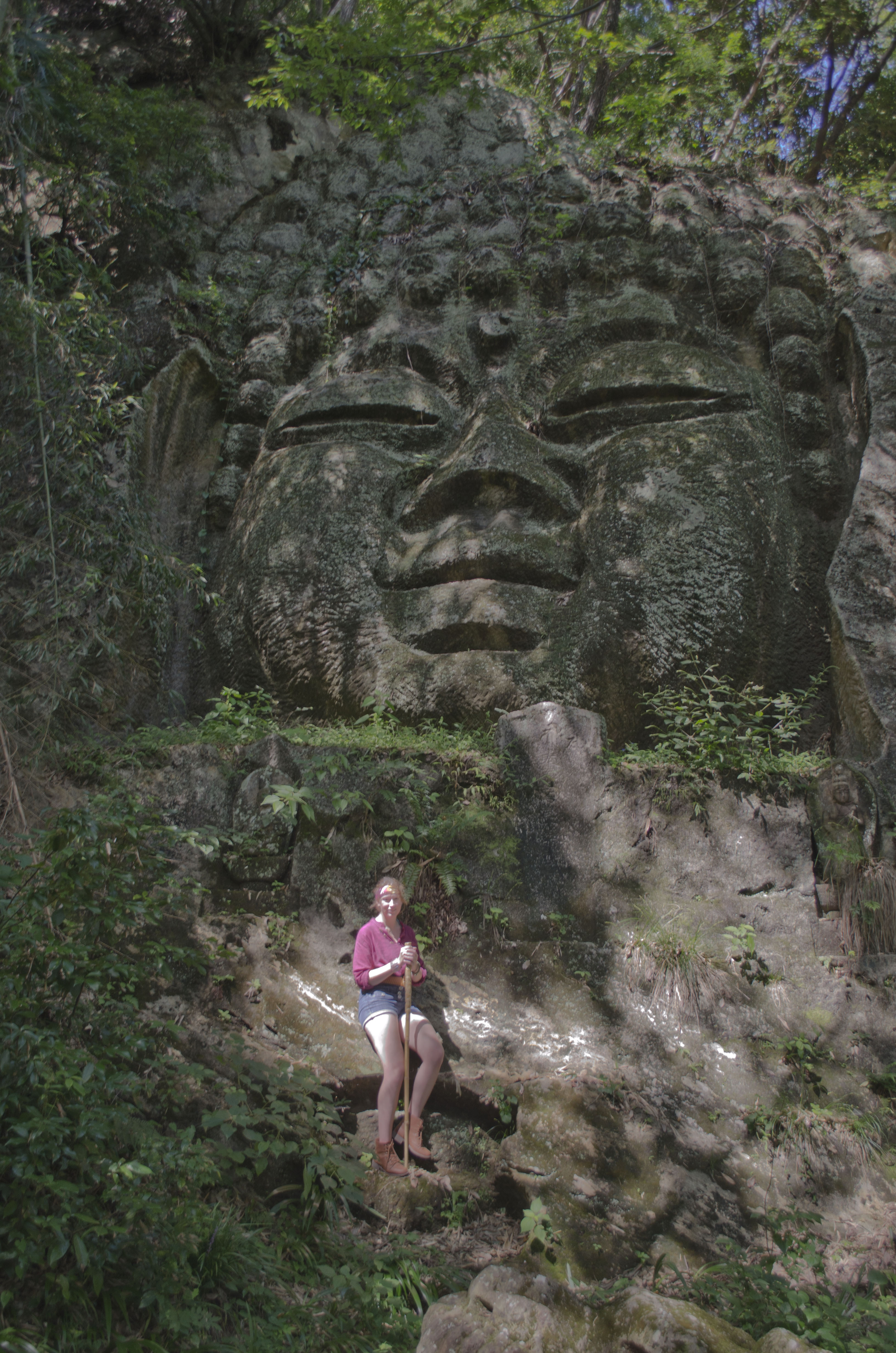
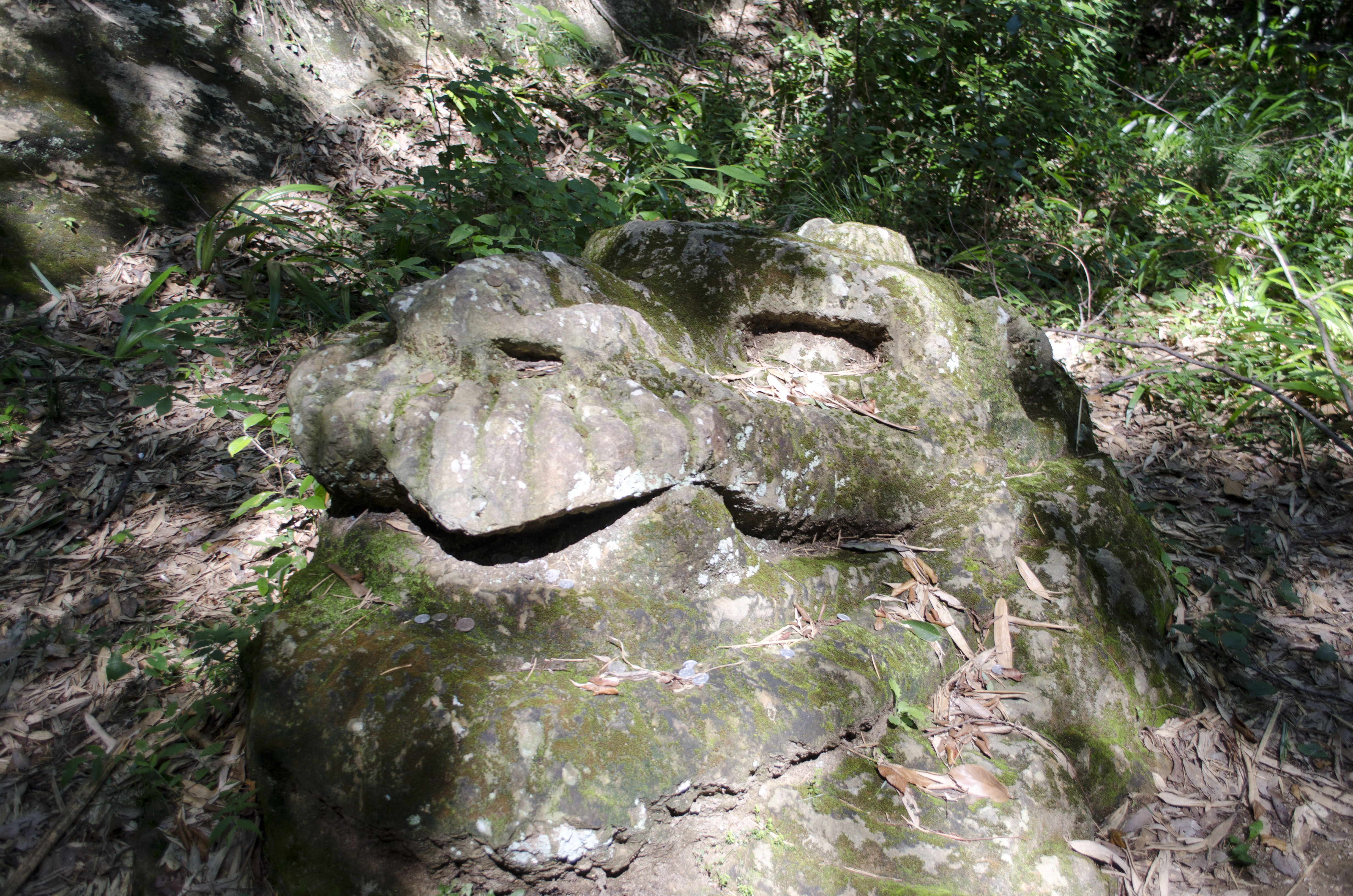
After our time in the garden, we went in search of the next “must do” on the list. Riding down side streets and over hills, we came to a small temple at a bend of one of the side streets. It looked much like the many other temples I had seen, and I nearly rode past until I noticed my co-worker had stopped and was parking their bike. It is only after I climbed the first set of stairs to the temple that I realized it is very much different. The old, worn wood door held a wooden fish sign like a welcome plaque, and the other side of the doorway was housed a trash-can type vessel stocked with walking-sticks of various sizes. Equiped with a walking stick and sense of adventure, we started up the thin overgrown path up the mountain behind the temple, and into the bamboo forest. When we had reached the top, what little breath was left from my hike up was taken away at the sight of the face carved into the mountain side. This shrine, which locally isn’t well known, is littered with smaller statues and carvings along the path.
The door-hanging fish, the face in the mountain, and the bamboo forest.
In front of the face, there is a carved creatures head that protrudes from the ground by about a meter, and is about a meter and a half in length. and a turtle of about equal size to the right of the statue, that would be otherwise unseen by the amount of growth that’s growing the rock.
The creature
Tomioka Silk Mill; The UNESCO world heritage site
(Written for The Heritage Travels)
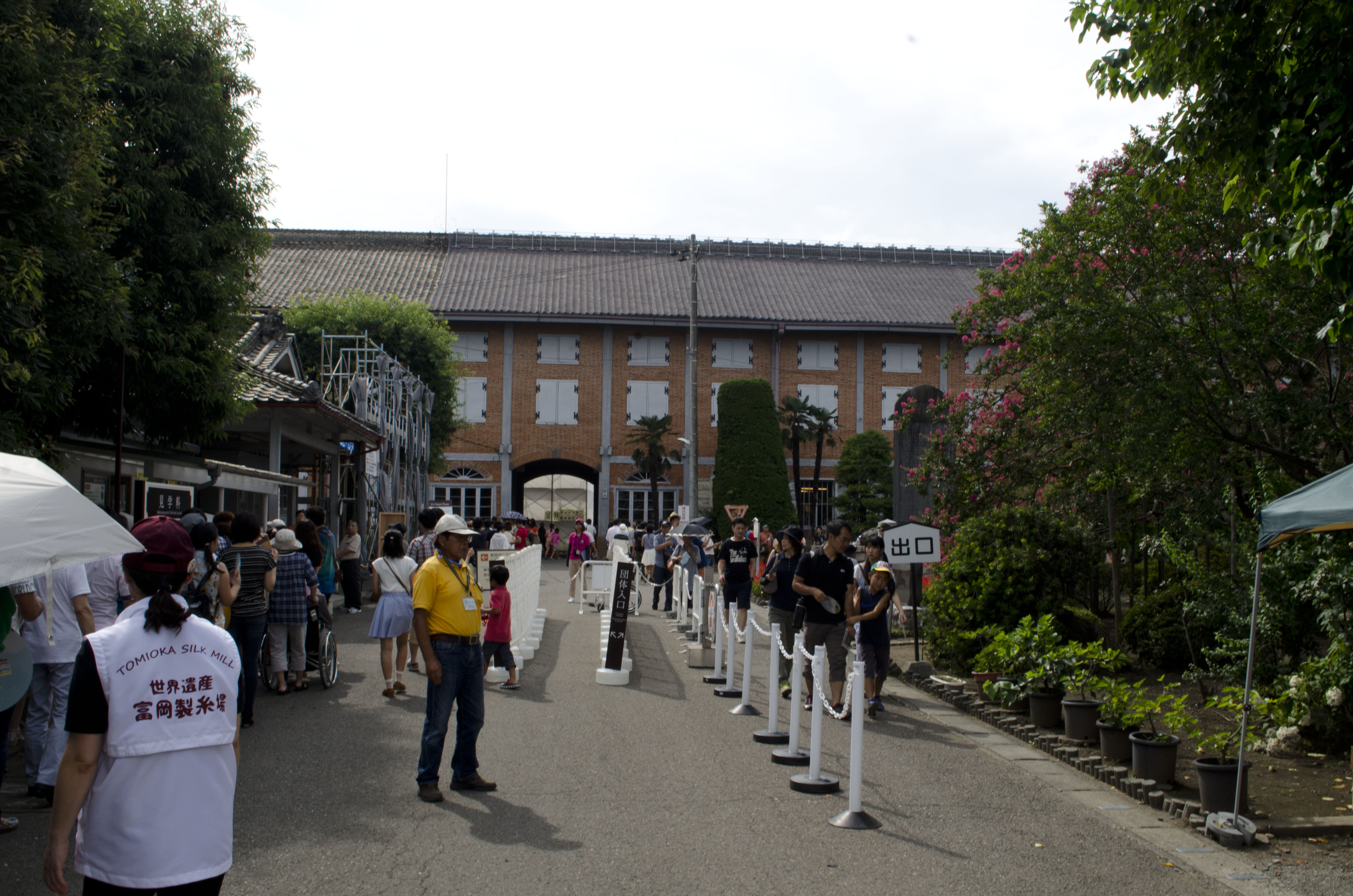
Tomioka Silk Mill, the latest UNESCO world heritage site in Japan, sits along the river in the south of Tomioka. When I sit at my desk, I can see the tall chimney from my window and with summer break, why not? It was only a few blocks away.
I loaded up my bike basket with my camera and a bottle of water, and rode in the direction of the mill. I could tell when I reached it, since the crowds became impassable. On my first pass the line to get in was building, and for lack of bike parking, I rushed to store the bike nearby and join the cue. The small admission fee (500 Yen for adults, 250 Yen for university and high school students, 100 yen elementary and junior high students, and 1 child/disability with 1 accompanying free,) goes to the preservation and restoration of the buildings.
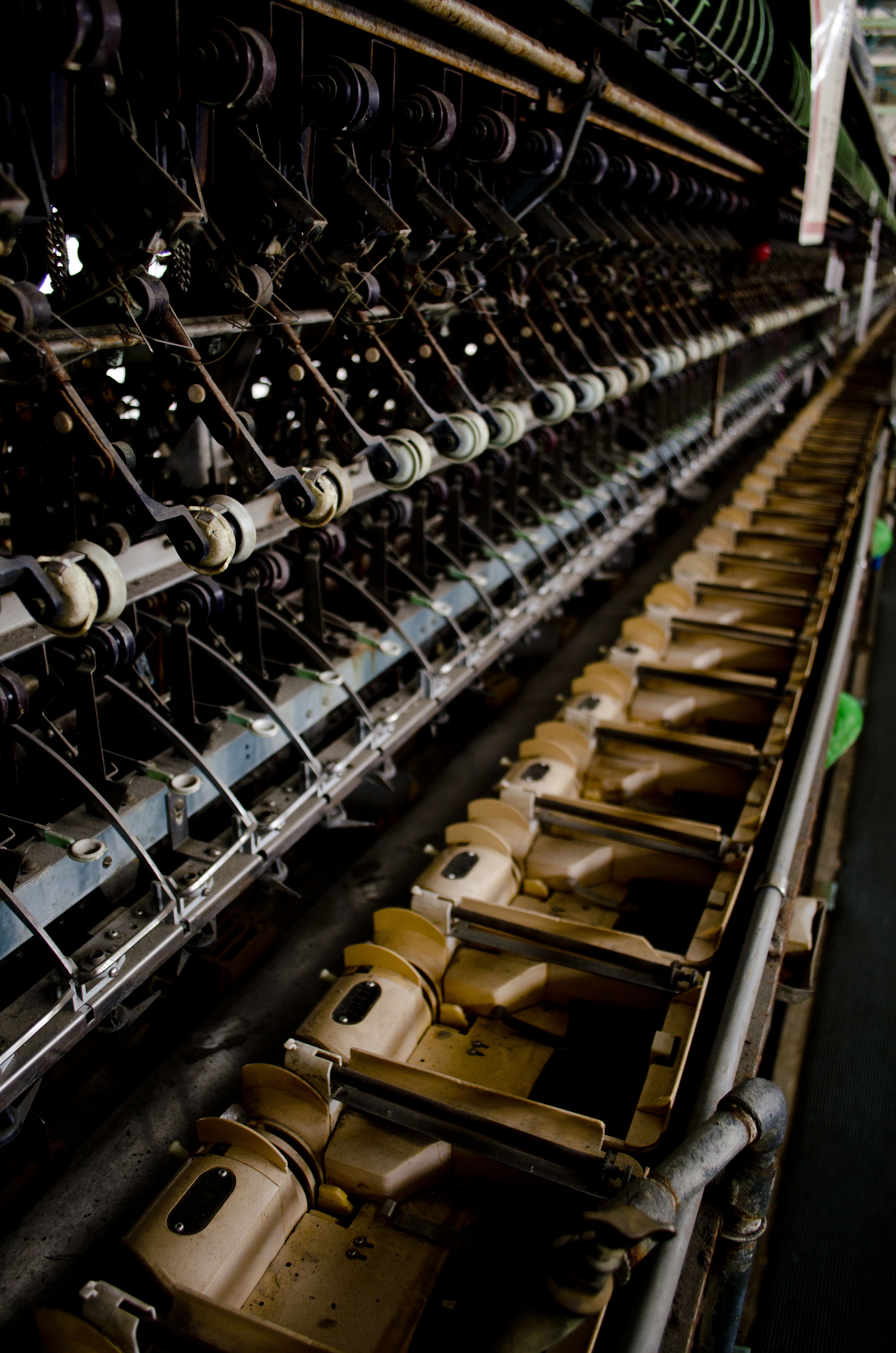
Constructed in 1871, the long buildings still house some of the equipment, and displays some of the machinery that was lesser used. While free Japanese tours are offered hourly, a self guided audio tour in English can be accessed via smart phone, using the QR code provided at the entrance. (Other languages offered include; Japanese, Italian, Chinese and Korean.) They also provide English maps upon entry, with the quarky historical facts such as the delayed employment to initially run the mill because there were French workers and their red wine was mistaken for blood. (I wouldn’t want to work with people who drink blood either.)
The mill had shut down in 1987 after being in Operation for 115 years. With the loss of work in the area, Tomioka went from a factory town, to a sleepy mountain town until 2005, when the buildings were designated as a National Historic site, which increased the tourism in the area, giving the town new life. Two years later in 2007 the site was picked up by UNESCO as a world heritage site.
Written by Kiki Lathrop
Kiki is a writer, photographer and archaeologist from Colorado. Growing up on a sailboat in the Caribbean, she was introduced to different cultures early, and it fueled her passion to experience the world first hand. Over a year has passed since she set out a solo female traveler, only to discover that we in the travel community are never alone. You can read up on her stories and adventures at her website.
Please check out Kiki’s website, travelgypsea.wordpress.com, for more inspirational and educational posts!
Icebucket challenge
Raising awareness for Lou Gehrig’s Disease, and cooling off in the precess. You can make a donation at ALSA.org
Its those small towns you have to watch for; My first month in Japan
It seems like yesterday I was taking the clunking, grumbling train from Tokyo out into the countryside. The bright blue sky and rolling green hills that meet with the blue grey silhouettes of the humidity shrouded mountains welcomed me across the interchanging fields and clusters of houses. For being part of the small school, my co-workers took me in to show me the local sights, and tell me of a few places to explore.

Every Friday night after work, the crew gets together and we would go out to the local sushi restaurant. The small wooden paneled room opens by a thin sliding door to the small sushi bar displaying the catch for wanting customers. In the adjacent portion of the room is an elevated wood platform, where as custom requires, we take off our shoes to sit on the floor around the low table. The man who runs the shop is nearly always smiling, and excited to try his English on us as a captive audience. It doesn’t take long for the place to get under your skin. As my co-worker said, the crowd there had developed the feeling of Cheers.
August through October is Festival season, which provides an excellent time to see the culture at its richest. Tomioka, Takasaki are two of the more popular towns for parades, fire works, dancing and street food.
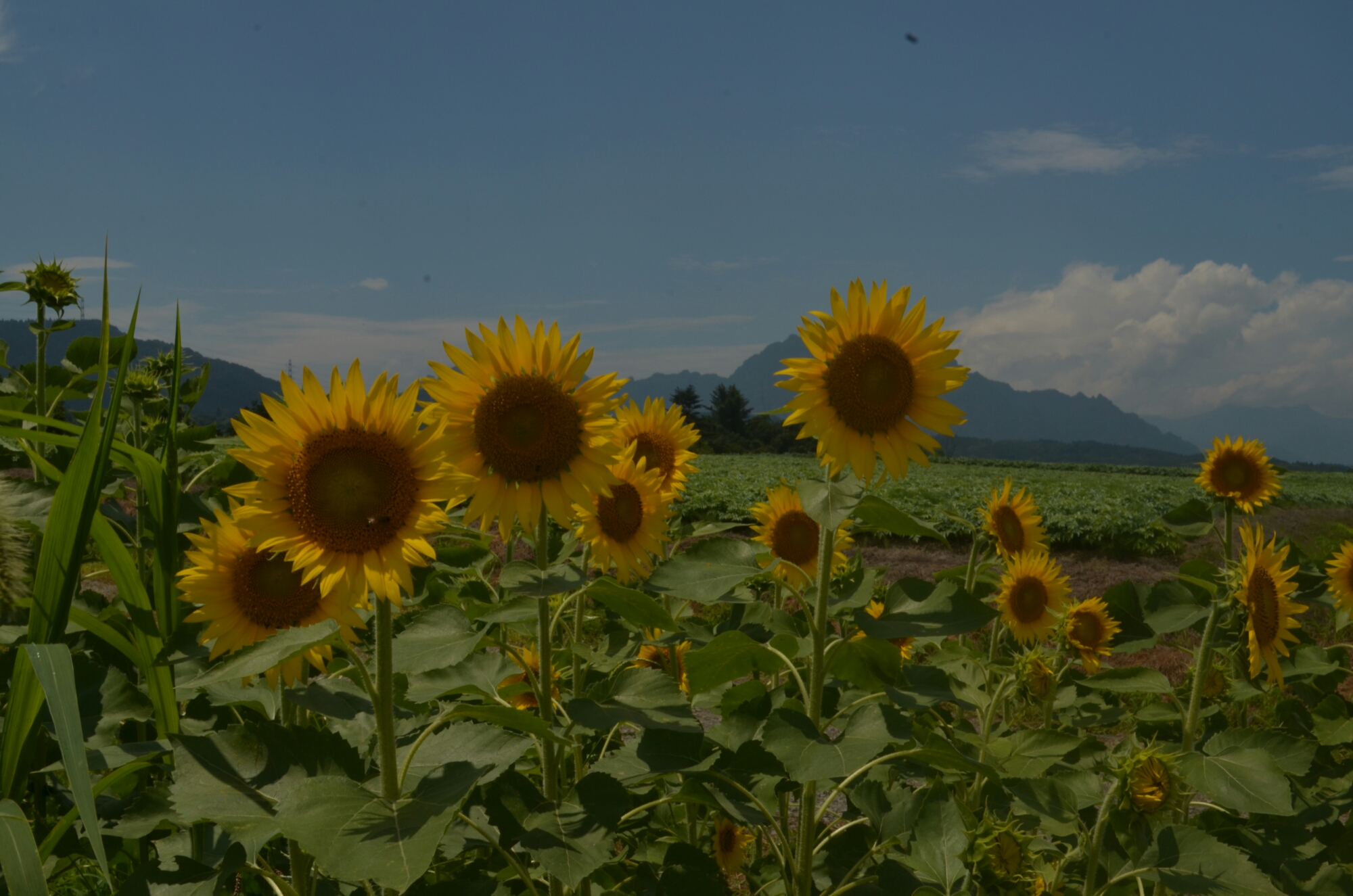
Being mid-late summer, there is plenty to see and do in the surrounding area of the stat of Gunma. Known for hosting the 1998 winter Olympics, the mountains that offer skiing in the winter also offer exceptional trails for the summer. (And as a Colorado native, I’m picky with my trails.) The only disappointment that I encountered was that I didn’t get to see one of the indigenous primates – the Japanese Macaque. (I will just have to go find one at the famous monkey park this winter, which supplies hot springs specifically for the monkeys, where they swarm to bath in the masses during the snowy months.) Additionally in the area, mid summer offers sunflowers in full bloom. The fields, which are back-dropped by the luscious green mountains and sometimes blue sky offer a breath-taking photo to send home to make the friends jealous.

As far as the language barrier, most towns offer free Japanese lessons at the community centers or town halls. If you are planning on coming over to improve your Japanese (no-matter how much or little you know), these lessons could be bennificial.
Stay tuned as I check out the towns recently UNESCO world heritage site listed Silk Mill.