Tag Archives: planning

Time Traveling in Denmark: Ribe

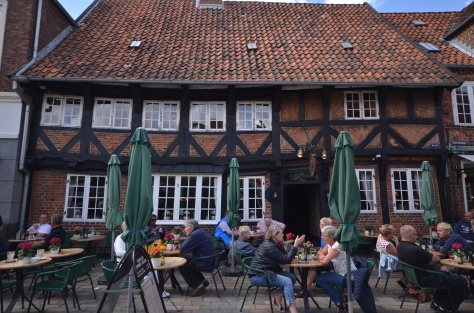
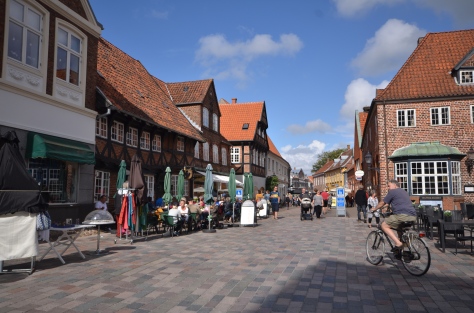
Ribe is a virtually untouched historical city that has maintained its character over the last century. Boasted as Denmark’s oldest town, Ribe (said as “Reeb”) has nightly Watchman tours that leave from the charming inn/restaurant, Weiss Stue.

DSC_3651.JPG

The old town hall doubles as a small city museum, with information and artefacts from the towns colourful history. Across the street from the train station is a Viking museum which explains viking burials and culture that was an active part of Ribe’s early years. While the town doesn’t have much for museums, the town is steeped in antiquity, and walking down the cobbled streets installs the feeling that you have stepped into a postcard.

DSC_3647

The small shop fronts house everything from cellphone repair, to handmade waffle cones to hold the homemade ice-cream, to art galleries. But if you take 3 right turns you’re back in the town centre. The courtyard of which, belonging to the church, had been excavated during the church renovation to reveal graves older than 5 centuries.

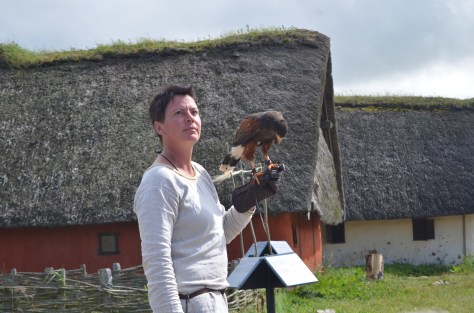
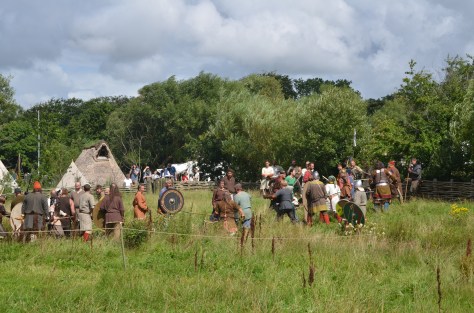
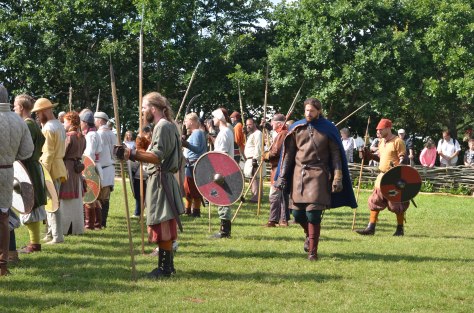
Just outside of town, accessible by a foot and bike path, is an open air museum that focuses on viking recreation archaeology, with some showmanship thrown in for good fun.

You can buy jewellery that is handcrafted with traditional methods, watch a viking battle, or ask the people about their daily lives.

DSC_3813DSC_3739DSC_3838


Time Traveling in Denmark: Roskilde and Lejre

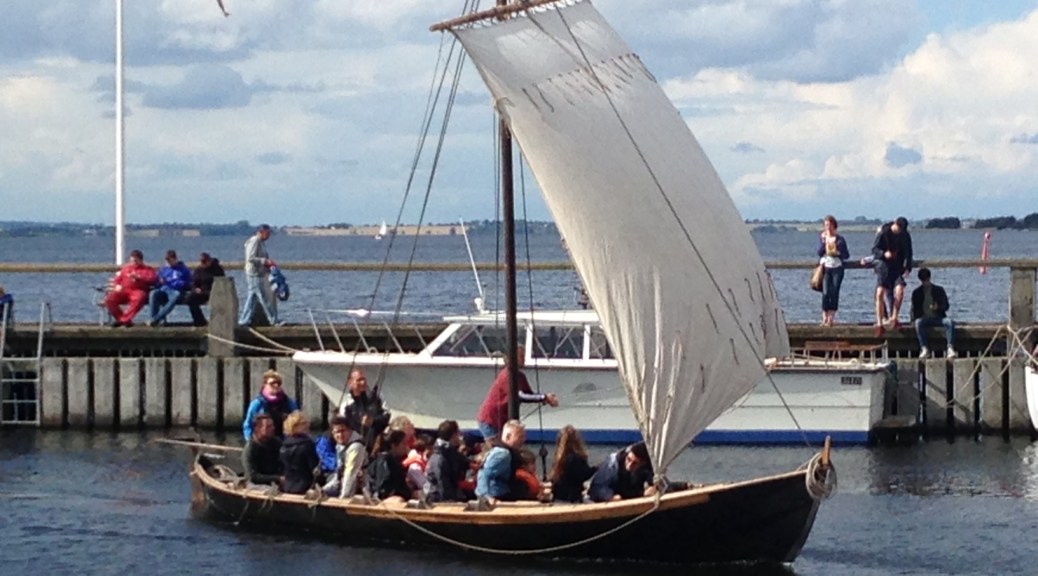
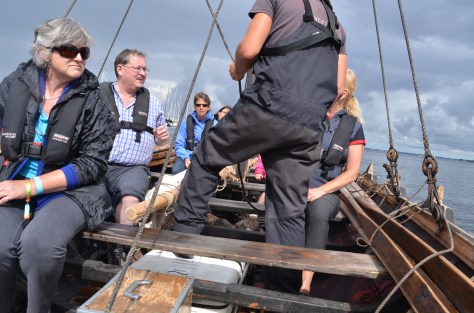
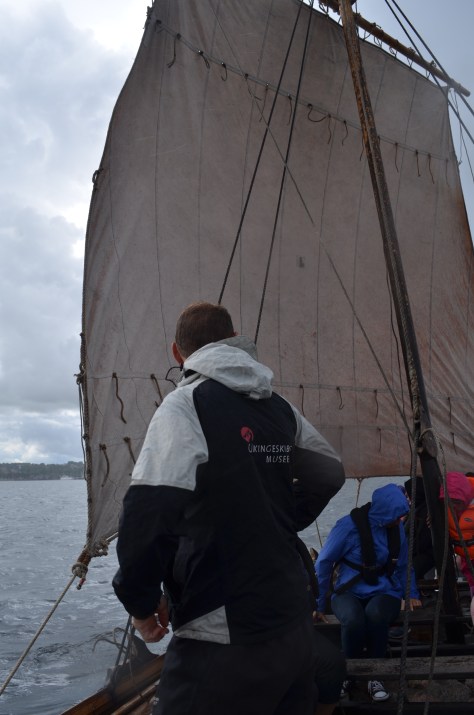
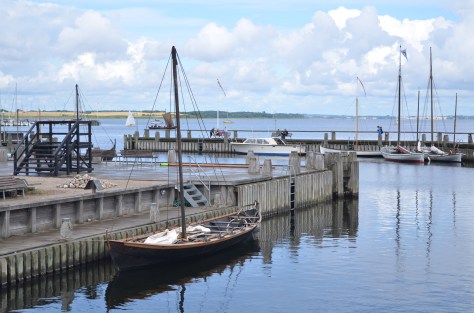
A 30 minute train from Copenhagen brings you to the quite town of Roskilde. It is easy enough to stay at your accommodation in the city and make the day trip, however we found that if we did the trip again, we would have stayed at the Danhostel in Roskide and taken a day trip to Copenhagen. The hostel, which was more of a hotel, is located about a hundred meters from the Viking Maritime Museum. The museum focuses on recreation archaeology, putting the theories about how the ancient mariners ‘did it’ to the test. for 100 danish Krona extra to the Museum ticket you can go for a sail around the fjord in a replica of one of the viking ships that they had discovered at the bottom of the fjord as a defence.

DSC_3535DSC_3537DSC_3541

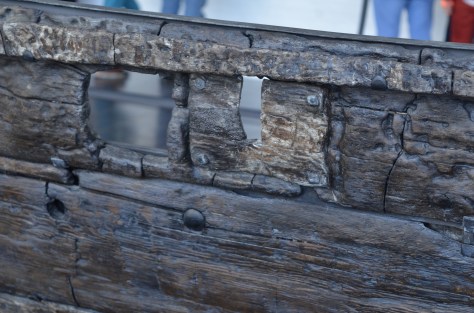
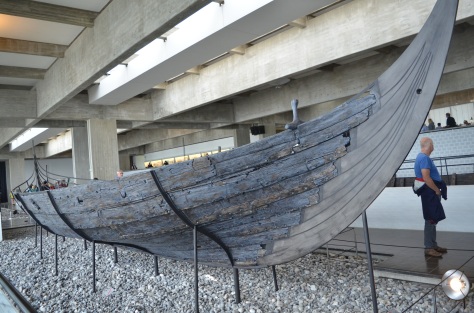
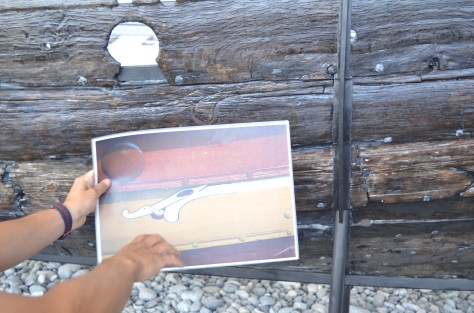
The 5 ships that were discovered had been purposely sunk, theoretically to block the deep and easy passages into the fjord, causing any ‘visitors’ (including attacking ships) to take a more risky route that would require the navigation of a local who knows the waters. The ships were brought up in the 1960’s as a large archaeological project, and were treated and now on display in the museum. (Free guided tours are available in English.) The manmade island where the viking ships sail from also hosts an open air style museum, with blacksmithing, rope making, and even the shipbuilding as in-situe recreation archaeology. In addition, if you want to get your hands dirty, you can chisel runes into a thors hammer pendant, or mint a coin in ‘ye olde’ way with a hammer and minting stamp.  if you want to join the kids table, they even have a wooden shield and sword.

DSC_3563DSC_3555DSC_3561

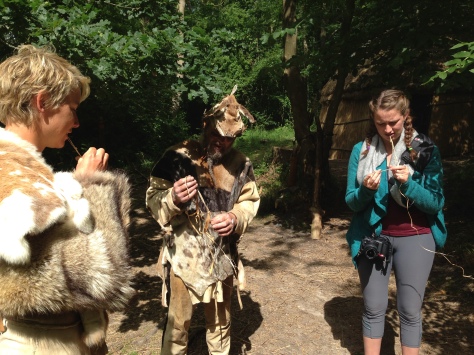
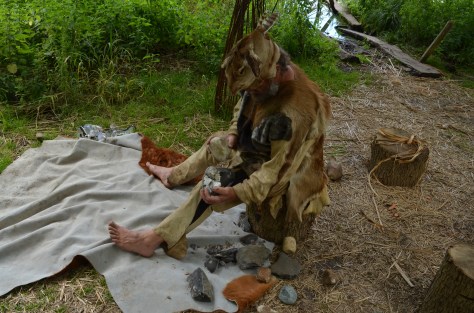
From Roskilde, taking a train to Lejre, and bus 233 from the station, you can visit ‘Land of Legends’, a open air museum dedicated to Denmarks’ history form the Stone age, through the Viking age, into the Iron and Middle Ages. The encourage getting your hands dirty and joining in the activities. learn to flake stones or make rope with the cave men, you can buy naturally died yarns from the weaver, or pots and mugs thrown by the potter. The park can be seen comfortably in 3-5 hours, longer if you participate in the settlements.

IMG_1998DSC_3624

Getting to Norway

The journey to Bergen was a 36 hour whirlwind adventure. We left Hirtshals Denmark on the “short ferry” to Kristiansand. Originally our plan was to take the overnight ferry to Bergen, and pick up there to continue traveling.

A few days early I go into the information centre and ask if the clerk can help me book some of the journey that requires booking, such as our ferry to Norway and first few trains. When I give her the dates, we find that the overnight ferry is sold out. Rather than continuing booking for another ferry (which we had our backup in mind) she throws her hands up and says that she can’t do it because it has to do with Norway and she doesn’t know their system. So mum and I book our ferry separately, giving up the discount that we should have gotten for our Eurail pass, but hey, at least we get the buffet on our crossing.


A few trains and many hours later, mum and I roll into Hirtshals, and lug our bags the 1.5 km to the ferry terminal. It was overcrowded and we thought we were waiting in line for check in, really, a family had decided to wait for the ferry right in front of the check in. A really nice kid who knew English told us that there wasn’t a line and we weaved our way around the crowds and checked in. The crowd was for another ferry and cleared out a few minutes later, leaving the terminal virtually to ourselves. When we boarded the ferry, we were seated in the buffet section and joined the people at our assigned table to start on the buffet before leaving dock. That turned out to be a really good thing, since once out of the harbour the waves had built to 4-6 m. It was enough to make the ferry roll, sway, and pitch with just enough force to get a good portion of the passengers seasick. The poor cabin crew, who were so lovely, would be constantly reminding people to get to the lower deck if they didn’t feel well. I, however, felt like suave as I pulled out my sea legs and was able to walk the 30 m to the toilets without stumbling as most everyone else was. (I even noticed a few admiring glances. Not at me, but more the fact I could walk.) The rough North Sea added an hour to our commute, but our accommodation was wonderfully close. We went straight there, as our train to Oslo, then on to Bergen was set for 4:45 am.


When it came time to wait at the train platform, however, we noticed all the boards said that the train didn’t depart until 10 am, which would make us late for our connection. Google maps had been giving us the departure time for Sunday… And Monday. (Fun fact: that additional time they list is not labeled with a date.)

Now remember, when we were in Denmark the lady wouldn’t make our bookings for us for Norway. Mum and I were planning on using our layover to book the rest of our journey in Norway. The next best thing was google maps said there was an early morning bus. It would get us into Oslo 45 mins before the train we needed to take to Bergen. The drive was great. The different shades of green that blanketed a rocky mountainside was picturesque. When we arrive at Oslo, we aim straight for the ticket counter to get our tickets for the next week. I ended up talking to two ladies, the first a bit grumpy, I asked for two tickets for the twelve oh three to Bergen, and she doesn’t miss a beat before saying “that’s impossible”. The second lady explains that the train is booked full (though the Eurail planner does not show that reservations are even an option) and that getting on now would be up to the conductor.

As the train pulls into the station, I go to the head of the train to meet with the conductor, and I notice a guy right behind me. Ryan had been told the same thing, and we went in search of the conductor. The conductor that checks tickets got off, and Ryan and I met him on the platform and explained our situation. He told us where to hang around on the train, and it would be up to the other conductor. We waited. We tried getting seats. People with reservations would show up. We would move. This happened a few times until we felt safest bet was the dining car. Ryan went out to check one last time and came back with 3 seat numbers we could occupy. We watched the clock. 12:01. People walking up the car as we hold our breath they aren’t looking for the seats were in. 12:02. See the occasional person on the platform, but no one getting on or off. 12:03. We ease out of the station and breath a sigh of relief. The seats were ours.

DSC_3916.JPG

The train ride was breathtaking. From fjords to glaciers to waterfalls. Ryan, who sat across the isle from us, and I talked for a while till a nice Norwegian guy came to take the seat next to him. We chatted periodically through the ride, but mostly mum and I would be pressed to the window to see the scenery.

We arrived in Bergen too late to get the tickets for the week, and went looking for our hostel. As we were leaving the train station it started to rain, then we got turned around in our directions. We decided for the 500 m to our hostel we would get a taxi and not walk in the rain with all our gear. The taxi we got was a bit too eager, which was the first red flag, then he pointed down the road and said ‘oh yeah, it’s just over there.’ And proceeded to drive THE OPPOSITE DIRECTION. The driver, who was from Somalia, pulled in front of the building, and helped us with our bag while trying to distract us with pleasantries about how much he likes America, and his fellow Somalian taxi driver had pulled up behind him. As were walking into the hostel, I hear him yelling at our taxi driver. While I could t understand the language, the meaning was universal. He was calling him out about driving us the long way, when we were only one block away from the train station.

At this point we’ve been up since 4, traveling all day, and we’re hungry. We just call it a day, grab a pizza from a local take-away, and go back to the hostel.

Now for our next trick… Getting from Bergen to Flåm on the morning train without previously booking.

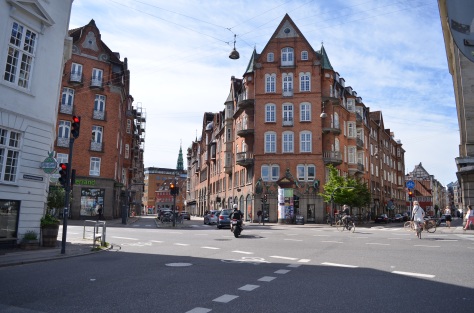
Copenhagen

First impressions of Copenhagen, after having just left Stockholm, was a little underwhelming. Coming out of central station the litter and homeless that crowded the exit made us worried that we weren’t going to enjoy Copenhagen as much as Stockholm. Our hostel was only a few blocks away, but the feeling in the area was very different. The old buildings bright colours had faded but still looked cheerful, restaurants along the street situated couples and friends out for a night of good food and company. At dinner I ordered a beer, and mum (who doesn’t drink at all) had about half. Mum, who is allergic to additives to most alcoholic beverages, goes straight to headach and stuffy nose when drinking. I ordered a Erdinger Weissbrau, and it was great. One, amazing, additive free, glass of beer.

DSC_3422

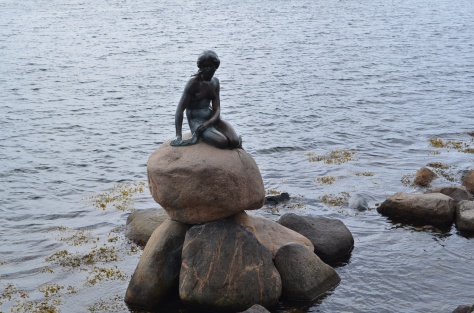
The next day we wondered around the city, stopping at a small cafe on the edge of a park no larger than a one car garage and filled with character. After some chocolate croissants and a chai we continued to visit some of the iconic sites. The Little Mermaid statue, based on the fairy tale by Hans Christain Anderson, lays along a beautiful scenic walk, marked in most guidebooks and tourist maps.

DSC_3442

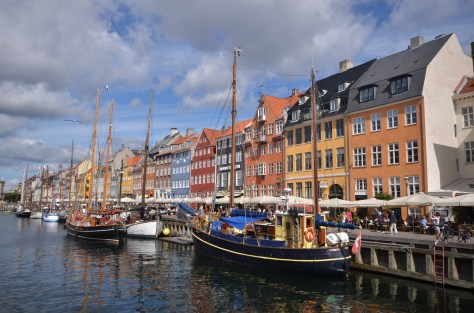
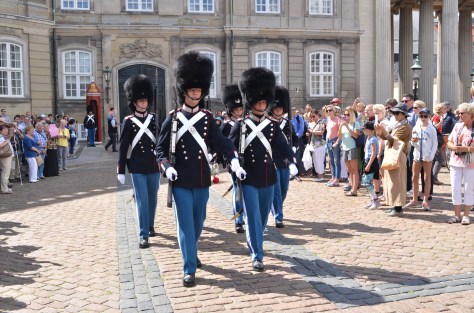
In the heart of the city, we walked along the canal that was lined with old ships and bright buildings. While wondering down random streets we came across a large square, and realised that the large building across from us must have been a government building and we arrived just in time to see the changing of the guard.

DSC_3467.JPG

Copenhagen has a lively bike culture. The bike lanes, as wide as a cars lane, are elevated from the street. Random bikes, unicycles, family bikes, and bikes with side cars. They were in all types and everywhere. While walking around I felt that I should have been listening to a Queen song.

DSC_3410

Copenhagen is a maze of wonderful scenes, and worth the time to explore.

Visby… Or ‘Breckenridge: the Island’

In the middle of the Baltic is the isle of Gotland. The largest town, Visby, has a rich history as a trade port that used to be as important as London or Paris back in ‘ye olde times’ when trade across the baltic was best done by boat as opposed to the newer methods of trains and planes.

From Stockholm, we took the bus connection to the ferry from Nynäshamn. The trip was fairly uneventful other than the doppelgänger of Rollo from Vikings, or Brock O’Hurn, across the isle from us. Oden bless the Scandinavians.

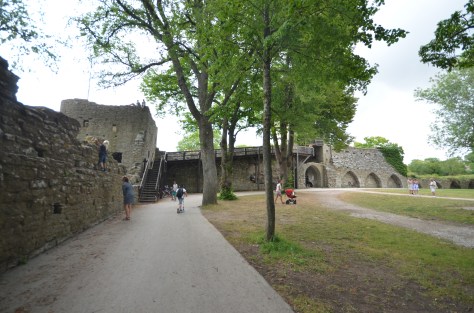
When we arrived, we had missed the bus to the resort, and decided to keep our gear as we wondered around the narrow, winding, cobbled streets of Visby. The whole island had an air of ‘vacation’ with tourists of Sweden and foreign vacationing the island. The old buildings had been repurposed, with a church ruin playing host to a cafe’s outdoor seating.  Other ruins allowed you to walk up stairways and across catwalks, and into dark crevices of the historic structure.

The town, which is only about 20 minutes to walk across, provided plenty of sights for us to visit while lugging our bags around. Under advisement from the tourist information desk we cut through the botanic gardens and went up one of the lookout towers that remain on the old city wall that has been standing since the 13th century.

DSC_3386

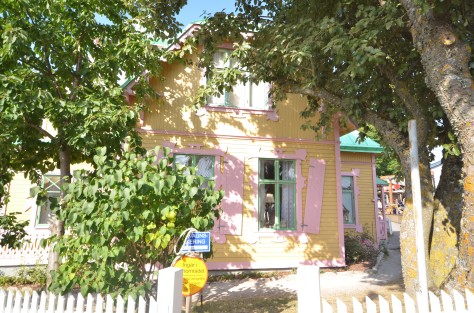
When we were done poking around the town, we caught the bus to the resort south of Visby, where we stayed the night. The resort hosts two theme parks (a water park and giant ‘playground’ with mini-putt, bumper cars, and go-charts), and Pippi Longstocking’s house.

DSC_3392.JPG

The accommodation, which was cabin/camp style, was reasonable for the proximity it provided to the attractions. The tourist atmosphere felt like Breckenridge. A place that even the locals go to to vacation.

The busses don’t run as frequently to the resort, and don’t start till late morning, so if visiting overnight like we did, a taxi is an option.

12 Hour Pompeii (from Rome)

We made our way to the train station and grabbed our 2 round trip tickets to Naples from Rome Termini station (be warned this is the expensive part, though prices vary by the train line, times, and location on the train.) With over an hour till the next train, we grabbed some breakfast and socked up at the small grocery that is in the station. (I recommend grabbing snacks, since Pompeii does have a restaurant but its really expensive. Don’t take sandwiches because they get super soggy. Fruit and Focaccia bread pizzas are prime.) The Bullet train got us there in an hour direct where we had to change trains to the Circumvasuvio line (which is down a floor  from where the log distance trains stop.Follow the signs to get to the ticket office, where for only 2.90 Euro each way you can get a round trip ticket that is valid for any time.)

DSC_2887Villa of the Mysteries

The train, which was 15 minutes late, was preceded by three other equally late trains, which meant many of the fellow tourists that waited to be Pompeii bound with us jumped onto trains that we are still unsure where they went. Once we figured out the board, we realised that the times being posted with the train destination were the times that the train was supposed to arrive (which is how we knew it was 15 mins late). We realised this and explained it to a family that was waiting on the platform with us and had tried getting on one of the previous trains before being told it didn’t go to Pompeii.

Once on the train, the half hour ride was crowded, but offered some amazing scenery of Vesuvius and the Island of Capri before dropping you off nearly at the gate for the site of Pompeii (which is marked Pompei Scavi, you would need to keep an eye open for it, since the stops are not announced.) For us it was pretty easy to find because that is where the entire train emptied in a flood of tourists onto the platform.

DSC_2857.JPG

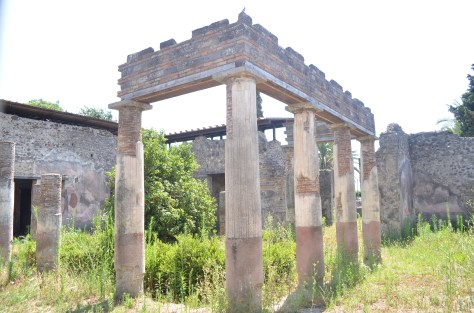
Courtyard in residence near city centre

Getting off there train, ticket offices and shops are just to the right as you get off the platform. Right away we were asked if we would want to join a group, and we thought we would just want to do an Audio guide to go at our own place and hit the places we would find most important. We bought our tickets to the site and the museum for 15 Euro, and went to look for the audio guide. In the building behind the ticket office, up a flight of stairs, is the audio guide office. The guy at the counter informed us that the audio guides were only in Finnish, and we would have to join an English speaking tour. As I turned around, I saw guidebooks. I highly recommend getting one.

The guide book, which is offered in many languages, comes with a pullout map labeled with the different attractions, which have a short paragraph that tells you about them. For 10 Euro in the guide office, this is also a wonderful souvenir.

DSC_2871

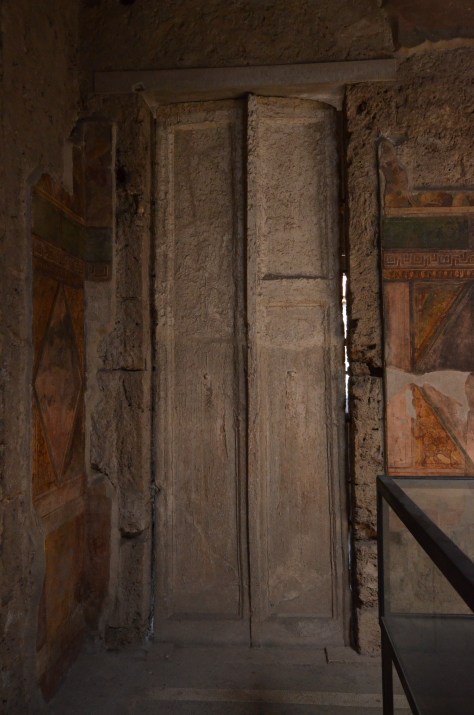
Original door in the Villa of the Mysteries

Pompeii is big. Once you’re in the site, its almost a lot to take in. Its best to have a list of about 5 things you really would like to see, and then spend the rest of the time wandering. We had little idea where to start, but I have made a list of some key places of interest

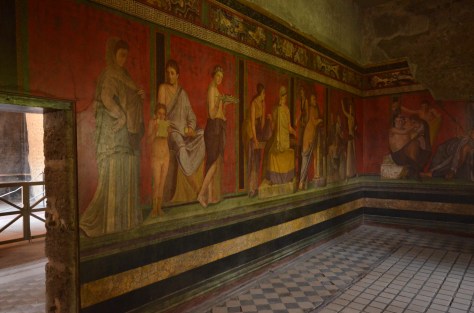
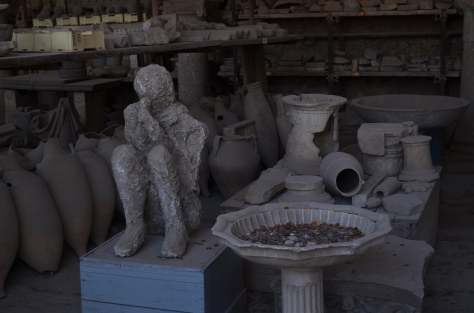
  1. Villa of the Mysteries, with a great preservation of the art on the walls and a couple bodies in the lobby.
  2. Temple of Apollo, The statues and the view. You really feel like you’re in the heart of Pompeii.
  3. Garden of the Fugitives, An example of how devastating the site was. (We were rained out in the late afternoon, and didn’t make it.)
  4. The Brothel, which has some raunchy pictures on the wall. (When we were there they were excavating that area, and it was blocked off.)

We left early because a thunderstorm rolled in, but that turned out to be a good thing.

Tip: The train to Pompeii, and the train back to Naples from Pompeii, is usually late. If you have a return ticket, it is a good idea to look at the time table, find the train that gets you to Naples before your train to Rome, and leave a train earlier.

The site is massive. We could easily have made a weekend out of it. Wear good walking shoes, bring a water bottle, and plenty of sun screen. (Mum brought the umbrella, and she recommends it.) Also, with the enormity of the structures, I recommend a wide angle lens for photography.

DSC_2844

A person praying

When in Rome, do as much as possible.

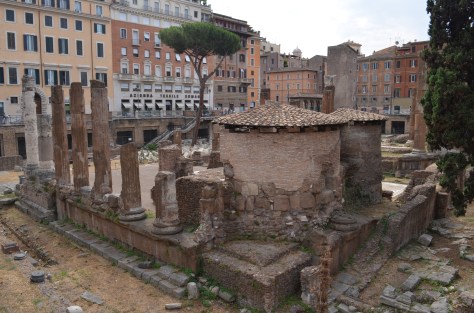
For an ancient city, Rome offers plenty to see and do, no matter what you want out of traveling. The key is to have a good plan before jumping in.

DSC_2549.JPG

As we left baggage claim at the airport, a Mobile Sim card company snagged us for a sim that will work in almost all of the countries that we will be visiting along this trip. The card, which we got with both internet and phone minutes, has already helped as we wondered the back alleys around our hostel looking for our street. And if you’re carrying a internet enabled phone, Google Translate (which you can download for offline use of typed text translations) can use your phones camera to translate signs on-the-go.

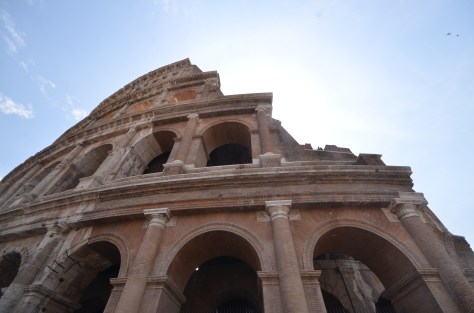
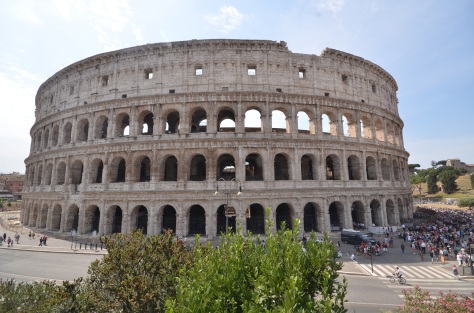
We stayed at Orsa Maggiore (for women only), which is centrally located in Rome, though got in early enough to drop our bags at the hostel and go wonder at the ancient wonders near by. The Colosseum and Roman Forum, stooping for Gelato on the way.

When approaching the Colosseum, we were stopped by numerous tour guides with the same plug trying to get us to join their tours for an additional 18 euro.

DSC_2601

My recommendation: Get a Roma Pass (the price varies by how much time you would like to keep it active for. There is a special line for both the Colosseum and Roman Forum for pass holders. While the guides were trying to convince us it would take nearly 2 hours to get through with the pass, it was really only 10-15 minutes. We also get free transportation with it, and makes the pass a worthy addition to our planning. If a tour sounds like a good idea to you, they offer audio tour devices just inside the gates into the Colosseum.

DSC_2599

When walking all over the forum, there are a couple things you will want with you. A camera, a hat/sunscreen, A water bottle (which can be refilled at one of the many water fountains in the city,) and a map/guidebook (we have the DK eyewitness Italy book, which explains a bit more about what were looking at.)


The Road to Omligot: Language apps that work

In the last couple weeks I have been fortunate to line up a future job in ESL after I graduate. The problem? It’s in Iceland, and I know nearly NOTHING in Icelandic. This doesn’t stop me though. Before moving to Japan I only knew “konichiwa” and “arigato” (which to this day only rolls through my mind to the tune of ‘domo arigato mr. Roboto’.) Otherwise my Japanese skill was limited to ordering from a sushi menu. How then, you may ask, did I survive going solo to foreign lands, and living for the better part of a year?  In addition to embracing the adventure, I learned.

About a week before flying to Tokyo, I pushed myself to learn to count to ten, say ‘yes’ and ‘no’, and the rest I would have to figure out later. After settling in to my town to teach I enrolled in free language lessons in the community centre, and was “fully emersed”.

Now, seeing the benefit of having more than a week to prepare, I have downloaded some free language learning apps to review. I will be trying to learn Icelandic, though if an app doesn’t have it, Ill give French a go.

1. DuoLingo

Pros: COMPLETELY FREE! Offers the main popular languages (German, Spanish,more challenging etc.) and even Klingon is “Hatching”. (Yes my Trekkies, you too will be able snarl with proper grammar.) When signing up for the app, you can connect to your friends from social media and challenge each other in your progress, and you can log in on their website, or the app and continue your progress. DuoLingo will send you “reminders” to do your daily lesson and stay on your streak, and you can link your language ability to your linkedin profile. Additionally, it is set up like a came, where you earn “Lingots” by completing lessons to buy a one day ‘streak freeze’, outfits for the cartoon owl, and bonus lessons (eg. how to flirt, or idioms).

Cons: limited selection of languages available. While it does help with the ability to remember vocabulary, the voice recording is not sensitive enough to tell if your pronunciation is ok, and if you fall out of your “daily streak”, you don’t feel as motivated to start again. All work has to be done online.

Languages:

(for English speakers available on app) Spanish, French, German, Italian, Portuguese, Dutch, Irish, Danish, Swedish, Turkish, Esperanto, Norwegian, Ukrainian, Russian, Polish, Welsh.

Overall ****


2. Memrise

Pros: Tracks daily progress, and lessons can be downloaded for offline learning, and the language list is extensive. As an archaeologist, I really like that it has ancient and dead languages, and there is even ASL for me to practice my signing. Pneumonic devices are suggested, and there is an emphasis on sight words. It’s a very easy program to figure out. Hints and tips for remembering words have been provided by fellow users, and give tricks for figuring out the pronunciation, which make the app feel more like a community.

Con: If you don’t do well with sight words this may be tough, as you have to remember how to spell them a short time after seeing them. The free edition has plenty of free modules to learn the basics of a language, and to get progress tracking and unlimited access to all modules you would need to subscribe. (Though its not necessary.)

Languages:

English, French, German, Italian, Japanese, Korean, Chinese, Portuguese (Brazil), Russian, Spanish, Afrikaans, Akan-Twi, Albanian, American Sign Language, Ancient Greek, Anglo-Saxon, Arabic, Armenian, +about 80 more. Has dead languages and 3 types of sign language. Creek was the only First Nation language that I saw, But I was impressed with the variety.

Overall ****


3. uTalk

Pros: Vast majority of the languages needed for traveling. (136 including variations in the same language. eg. Portuguese for Portugal vs Brazil, or US English vs UK English.) It is set up similarly to Rosetta Stone, though much cheaper.

Cons: The first module is free for all languages, then you need to purchase a module that goes beyond the “starter pack”. The starter pack just gives you a taste of the language, (“Hello”,”Goodbye”, “Help!”) though it is good to see if you want to continue on that language.

Languages: 117 common languages.

Overall: ***


4. FluentU

Pros: language learning in increments by ability. Uses video which is good for audio visual learners. Songs and videos can be downloaded to play offline.

Cons: Limited languages available.

Languages: Chinese, Spanish, English, French, German, Japanese

Overall: ***


5. Babbel

Pros: Downloadable for offline use. Uses learned language in a conversational setting.

Cons: After the initial “starter” lesson, you have to subscribe to access further lessons. The microphone for speech recognition is quick and you need to have a rhythm or you may miss it recording.

Languages: English, Spanish, French, German, Italian, Portuguese, Swedish, Polish, Dutch, Indonesian, Turkish, Danish, Norwegian, Russian

Overall: ***



SE Asia in a Nutshell: Part 1

Studying in Australia gives a few unique opportunities. For me, it included the chance to do field school through Vietnam, where we were privileged to work with some amazing people learning how the museum ‘does-what-it-does’.

However, outside of class I wasn’t expecting to see or do much, as my mental preparation had my mind thinking “business trip” rather than “vacation”. Those who know how I travel know that every moment I’m not trying to be a good student is spent exploring. (After all, I use academia as my excuse to go far away for long periods of time.) As South East Asia is in the news frequently for tourists getting in accidents, trafficking, or other not-so-pleasurable happenings, I didn’t think I would go there on my own, no matter how much solo experience I have. Two of my classmates who were also going to Vietnam agreed and the three of us decided to book a tour and continue through Cambodia and Thailand after our studies.


Vietnam – Hanoi

image

image

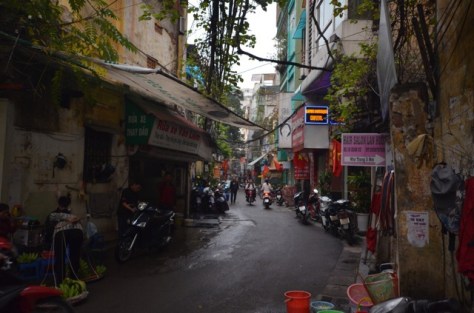
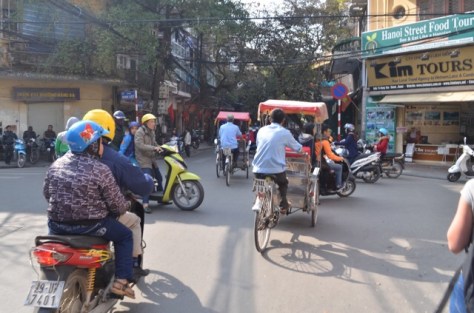
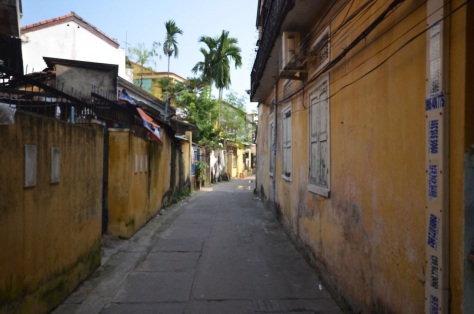
We started our two-week field school in Hanoi. The old quarter burst with life, vendors, pedestrians, and mopeds. Oh-so-many mopeds. The air was thick from humidity and exhaust in the narrow streets. The buildings, with their un-kept paint and traditional wood trimmings, towered multiple stories on either side. The ground floor housed open-front shops and restaurants with smiling and eager staff trying to wave you in for business.

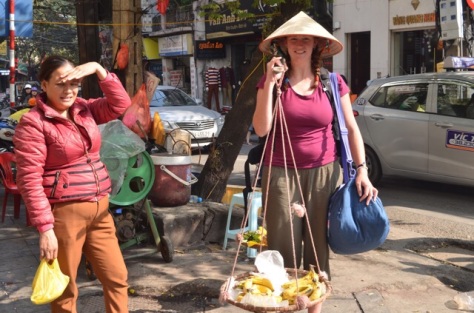
Walking along the streets, also be careful of taking pictures. We dubbed the women with the carrying baskets the “banana ladies” and developed the motto “beware of the banana ladies”. Within an hour of arriving in Hanoi I experienced my first of the photo cons. We were making our way to our hotel when a banana lady saw me taking photos and before I could get away, put her carrying stick on my shoulder and traditional hat on my head and kept pressing for me to take a picture. Me in my travellers hope that she just wanted to share her culture (after all that’s been my experience in most other third worlds) I passed my camera to my mate and had her snap the photo. As soon as the shutter snapped Banana Lady took back her gear and I thanked her and started to walk on now that she was, what I thought was obviously, done with me. That’s when she started yelling at me that I owed her 2 dollars. Ah hah! The next two weeks we had to deal with ladies following us down the street trying to put their carrying sticks on us as we would wiggle out from under them and continue on. Beware of the banana ladies.

image

Each street in Hanoi is delegated to different wares – tin, copper, glass, etc – and if there is something in particular you need, you can find shops competing on the same street.

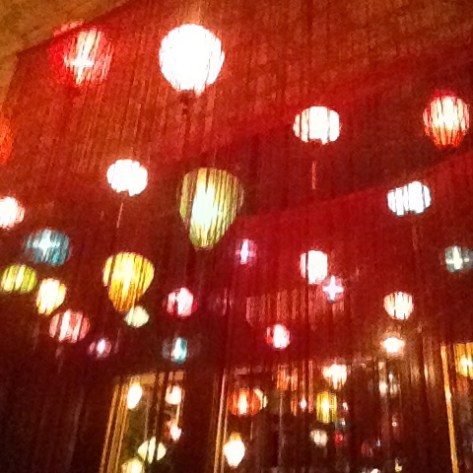
Food alley, while more expensive than the other shops that reside on another street, offers a multitude of options. In the heart of the city, the favourite of the field school was the Lantern Lounge, which could be identified easily at night by the plethora of lanterns that ornamented the face of the building. Once inside, you take of your shoes and sit traditional style at a table that is lit by many more paper lanterns draped across the ceiling. With free wifi and delicious vegetarian options in an English menu, we decided it was worth multiple visits. (When I travel I try to eat more vegetarian friendly because meat is usually harder to come by, and not always guaranteed fresh. So my rule of thumb is if you can’t read the local menu, don’t order anything unless you know what it is. I like to eat seafood in coastal towns, but since seafood can be temperamental I stay away from it if I have travelled more than two hours away from the shore.)

image

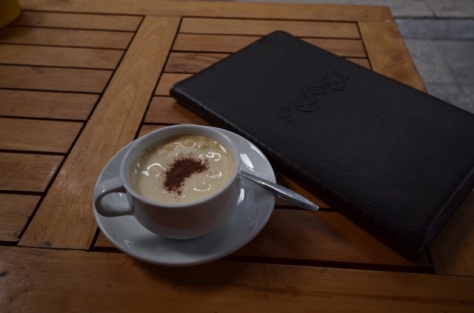
Another Hanoi specialty I highly recommend is the Egg coffee. It is the superhero of cappuccinos. A thickly whipped, sweet egg white topping layered on a cup coffee. That is a dissert in itself.

image

The Adventure to see Uncle Ho


While in Hanoi, morbid curiosity came over a few of my fellow classmates and I to visit the man we had learned so much about through our museum visits. After all, most of the museums in Vietnam display Ho Chi Minh as a larger than life demigod rather than the ruler of a country. His mausoleum is in Hanoi, and free to the public. Just remember the standard temple rule, dress modest, don’t lug giant bags in, and add that they don’t like you to take photos. That’s fine with me, I’m not too keen on photographing corpses, but the balmy heatwave in north Vietnam meant that one of my classmates and myself had worn shorts, which would have prevented us from getting past the many guards that were on the lookout for tourists that may be there to disrespect their highly regarded leader.

Once at the back of the 3 block line, we left our fellow classmates to find something to throw on over our shorts. The first shop we came across sold us a scarf to wear as a sarong and a pair of flow-y pants. We re-joined our classmates and continued through the line and past the video screens playing videos and testimony to “Uncle Ho”. When entering the mausoleum, you walk up stairs through small winding passages, designed to keep the climate-controlled room cool. Once in the room the whole experience felt surreal. The man in the open crypt in the middle of the room was stark white – no doubt due to multiple trips to be embalmed – and what interested me more than the marble looking man was the visitors that shuffled their way through with us. One older lady in front of us had streams of tears as she looked at him, and was offered tissues by who I assume was her grown daughter. Another man looked on in awe. I thought it was strange. It was strange to see how someone who has been long dead was displayed for the sake of his memory, and even stranger seeing the reactions to it. It was strange all around, but then, I’m not visiting embalmed leaders of countries every day.


Ha Long Bay

image.jpg

Though we stayed at a hotel for the duration of our field school, the trip I took to Ha Long Bay I booked a side trip through the FlipSIde Hostel. They were very friendly and if I were to do it again, I would stay there rather than our hotel. Options for Ha Long bay tours vary, but there is one for those who are just “passing through” and want a day trip to Ha Long Bay.

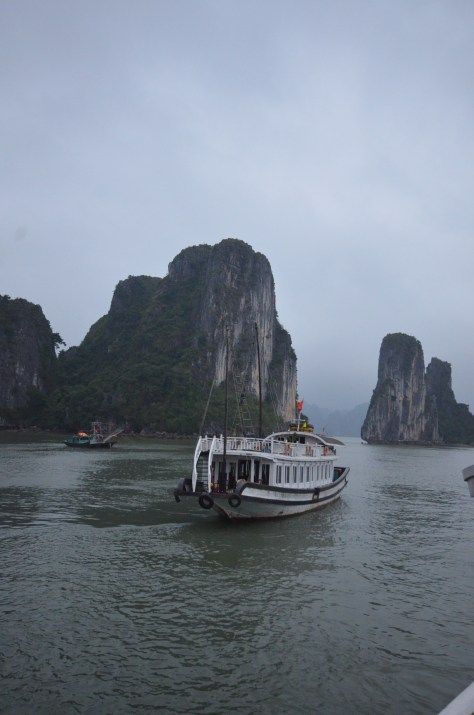
We left the hostel at 8 am, taking a small private bus about 4 hours to the bay, with a quick stop at a craft shop where all the craftwork is made by disabled locals. Once at the bay, we boarded a small motorised wooden cruise launch. A lunch spread of fresh seafood from the bay, with other additions, was provided for us to enjoy while leaving the harbour. In the bay, the sea cliffs rise straight out of the water, creating a maze of scenery.


Fun fact: James Bond “Tomorrow Never Dies” was filmed here.


Fun fact: Ha Long means ‘descending dragon in Vietnamese

image

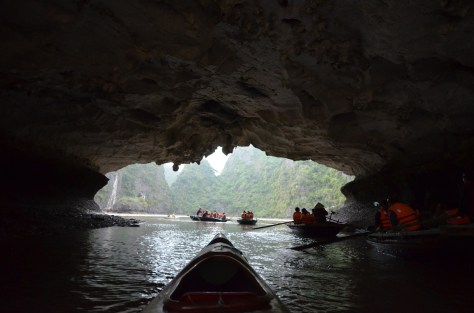
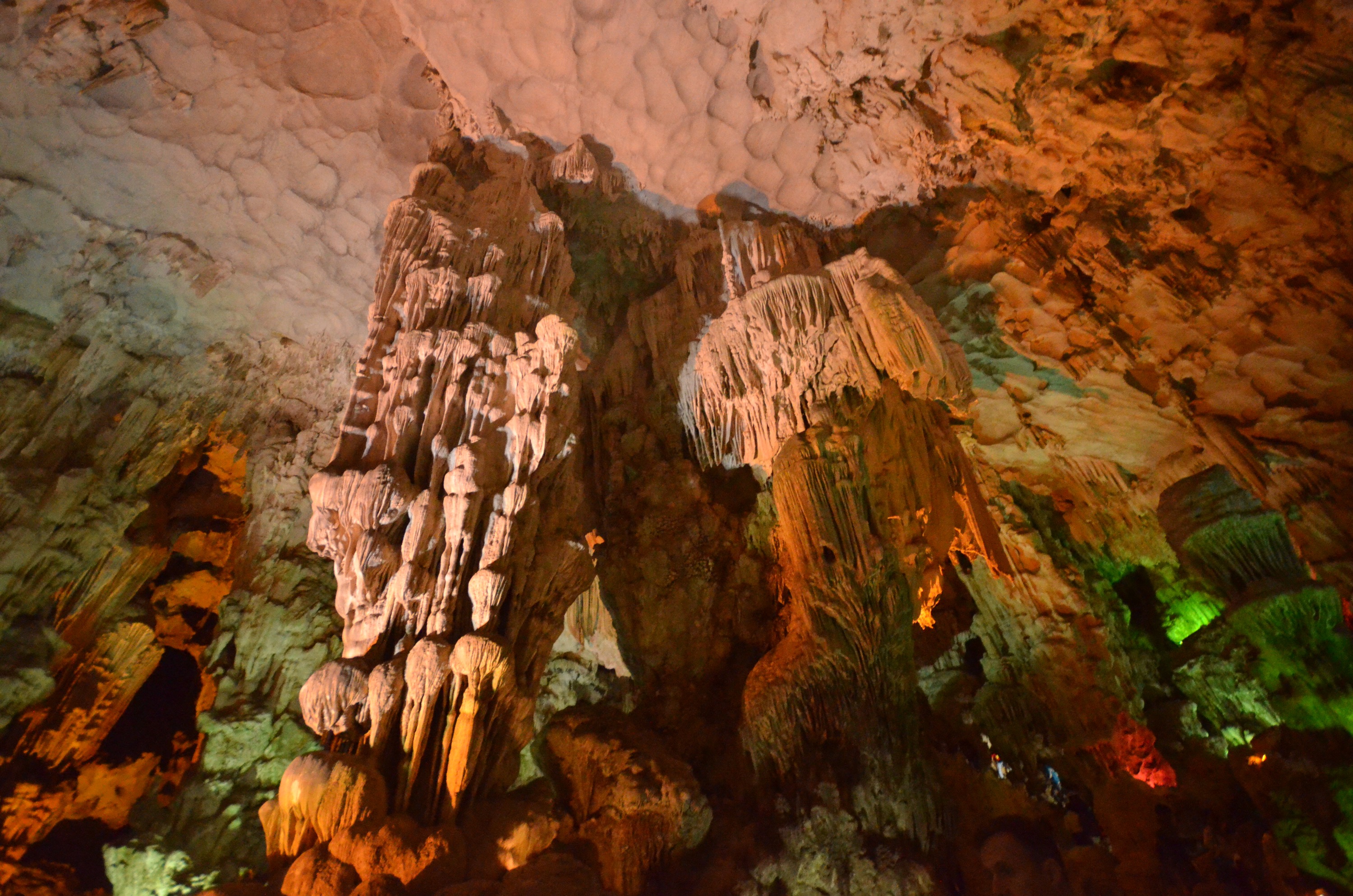
Our boat pulled into a little fishing village where we kayaked in a small bay area that connects to a couple saltwater pools via caves. After half an hour of paddling around, we made our way back to the dock in time to board the big boat again and go around the bay to a cave system that has been altered to hike through. The cave system is dressed with bright coloured lights that were put in to help show the contrast of the many layers of stalagmites and stalactites. One addition included a fountain in an existing pool. It was fun, beautiful, interesting, and no extraneous training was required to visit. But the complaint I heard most was it “looked like Ariels grotto at Disney world”, a bit cartoonish, and not authentic. In my opinion, it was an amazing day trip for less than $50. I would recommend it.


Da Nang

image

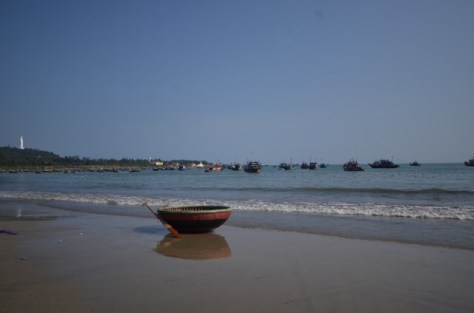
After Hanoi, we travelled to Da Nang. Da Nang has a slower pace than either Hanoi or Ho Chi Minh City /Saigon. With a beautiful river walk that exhibits local sculptures in a permanent art display, and the “dragon” bridge that shoots fire out of its mouth on the weekends, Da Nang is an amazing modern city to visit.


Hue

image

A day trip from Da Nang can land you in Hue (pronounced “way”), a wonderfully small tourist town. If you ever thought about getting something tailor made, this is the place to do it. The town is seaside, so the local specialty is oysters, and the seafood in the area is fresh from the boat.

After Da Nang, the field school was over. It was time to part ways with most of our classmates. My two companions and I went south to Saigon where we started our tour through the south of South East Asia with GAdventures.


New TravelGypSea podcast!

Hey everyone,

Its been way too long since I have had the chance to sit down to write, so I’m going to try something very new… A podcast. I have never done them am excited for this idea, since Im going to get other travelers I know to help with the making of it. This will be a weekly thing, where I pull in old info from past blogs, new info that could potentially be a new blog, and things that I just saw floating around the internet.

This week is Episode 1- General travel, where Natalie and I will be talking about some ideas for an upcoming trip. She has never solo traveled before and wanted some info for how to get started.

Podcast: Travelgypsea › Embed Code — Podbean

travelgypsea.wordpress.com

https://izi.travel/en/app

http://www.myisic.com

https://www.gapyear.com