Kanra:
The area holds onto its history as the safe-haven for samurai after they were ‘disbanded’. Coming from Tokyo, Osaka, and Kyoto, they were able to use the rural environment to continue on with their horses and arts, which has made the area very rich for authenticity.To this day, the area embraces its martial arts of Judo, Kyudo (archery), Kendo (staff fighting) and Kendu (sword).
About a 30 minute bike ride from Tomioka is the small town of Kanra. Shougun (a Samurai chief), had lived in the small town, and his old house is marked with a plaque outside the front gate. In the spring, during cherry blossom season, there is the Kanra samurai parade. This free event is held along the main road, flanked by cherry blossoms, and contains the authentic view of the samurai. Participants will dress to-the-nines in their samurai garb, women will dawn kimonos and paint their faces, and they will take to the cherry blossom lined road.
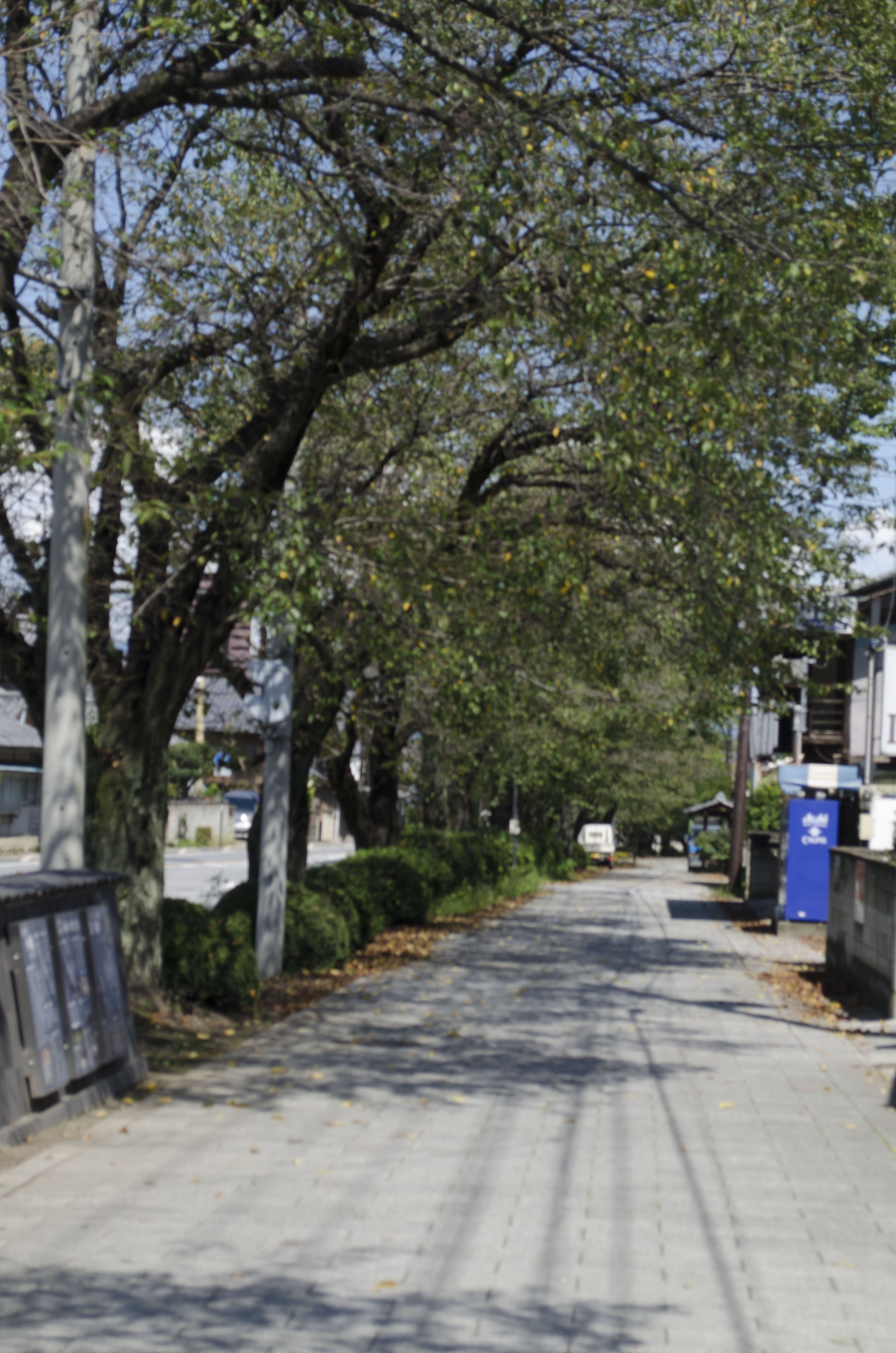
Cherry blossom trees line the sidewalk in Kanra.
Kanra also houses many temples, shrines and gardens that are not to be missed. When my co-worker brought me into the small town, our first stop was a large temple that we saw as we entered the town. Hiking upto the building, we ventured up an over gown path to the top of the mountain behind the temple. Capped with a small seating area, stage and a few tree’s lining a meadow, the lush overlook provided a wonderful view of the surrounding towns and mountains.
 A sample of the view.
Our next stop was the gardens in the center of Kanra. The 300 yen ($3) entry price is well worth it to see the rolling green hills, and lounge pond side to large Koi fish. In the adjacent museum that shows what the Samurai houses used to look like, you can buy a bag of Koi food for 100 yen ($1). I highly recommend doing this.
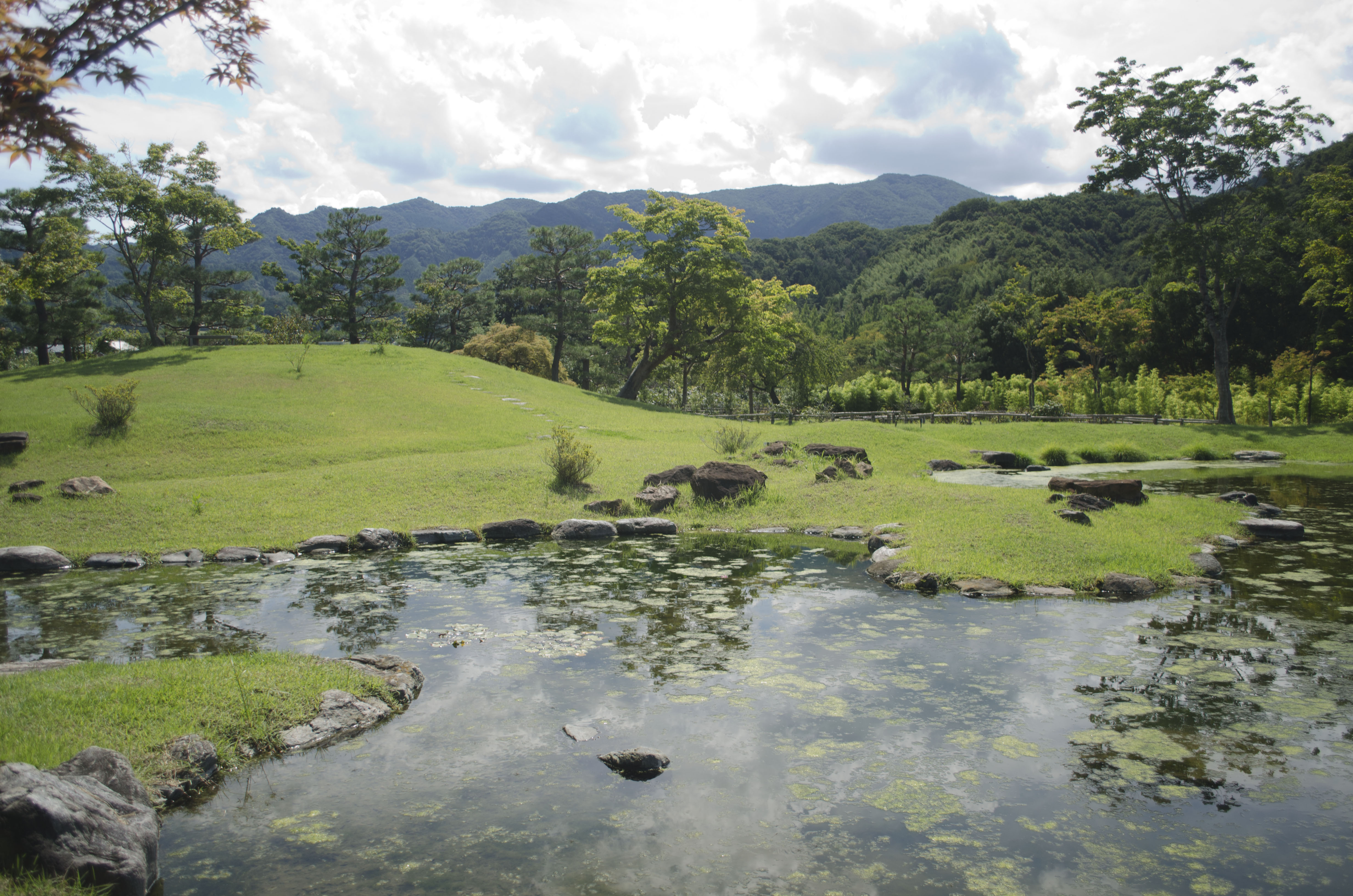
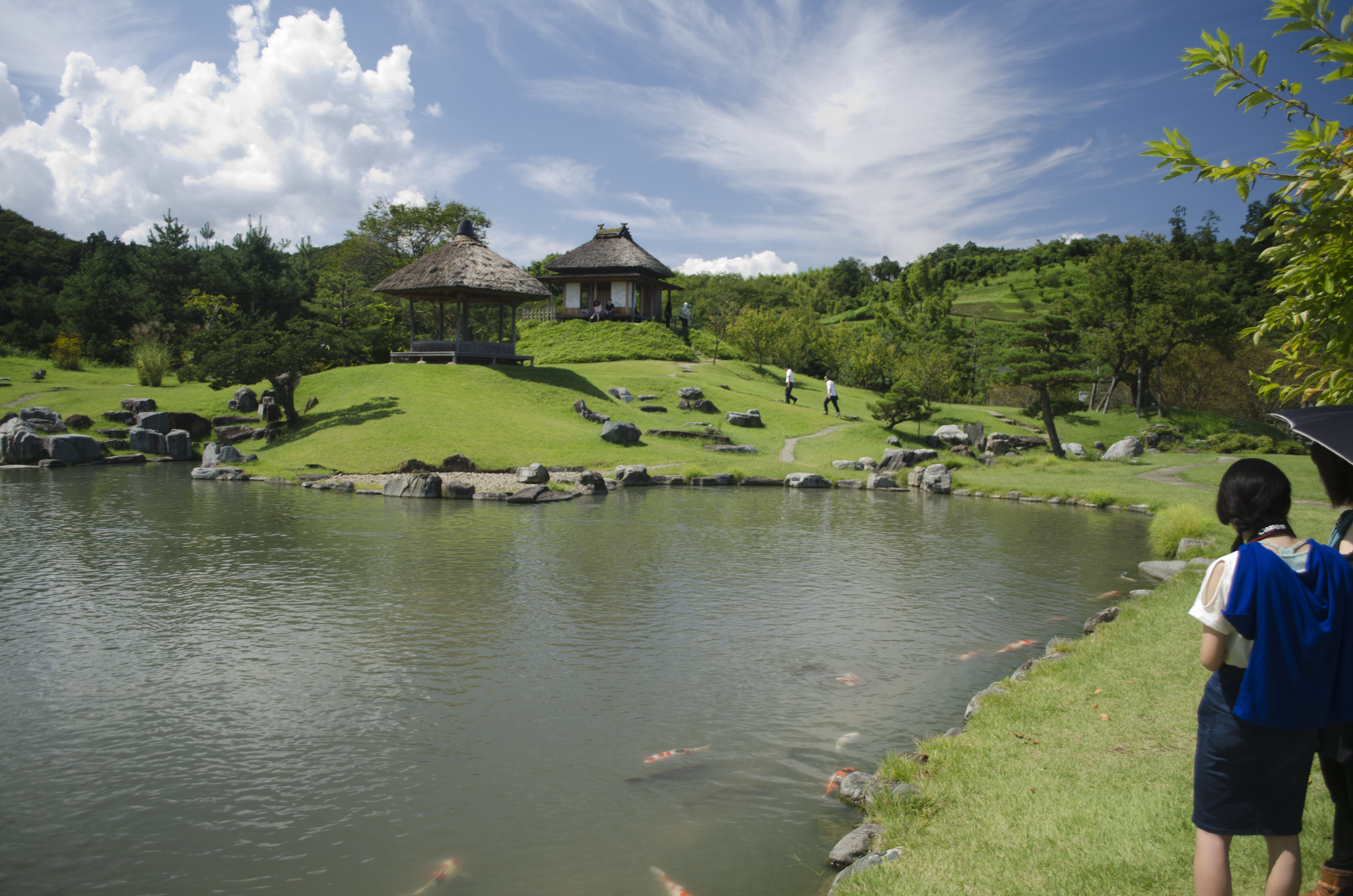
The gardens in Kanra.
Wondering around the garden, we came across the local Kyudo club in their practice. On the other side of the garden from the museum is an archery range, which at the time was filled with archers dressed in traditional clothing, practicing their technique.


Kyudo, unlike western archery, draws the arrow behind the head to sight down the arrow shaft.
After our time in the garden, we went in search of the next “must do” on the list. Riding down side streets and over hills, we came to a small temple at a bend of one of the side streets. It looked much like the many other temples I had seen, and I nearly rode past until I noticed my co-worker had stopped and was parking their bike. It is only after I climbed the first set of stairs to the temple that I realized it is very much different. The old, worn wood door held a wooden fish sign like a welcome plaque, and the other side of the doorway was housed a trash-can type vessel stocked with walking-sticks of various sizes. Equiped with a walking stick and sense of adventure, we started up the thin overgrown path up the mountain behind the temple, and into the bamboo forest. When we had reached the top, what little breath was left from my hike up was taken away at the sight of the face carved into the mountain side. This shrine, which locally isn’t well known, is littered with smaller statues and carvings along the path.
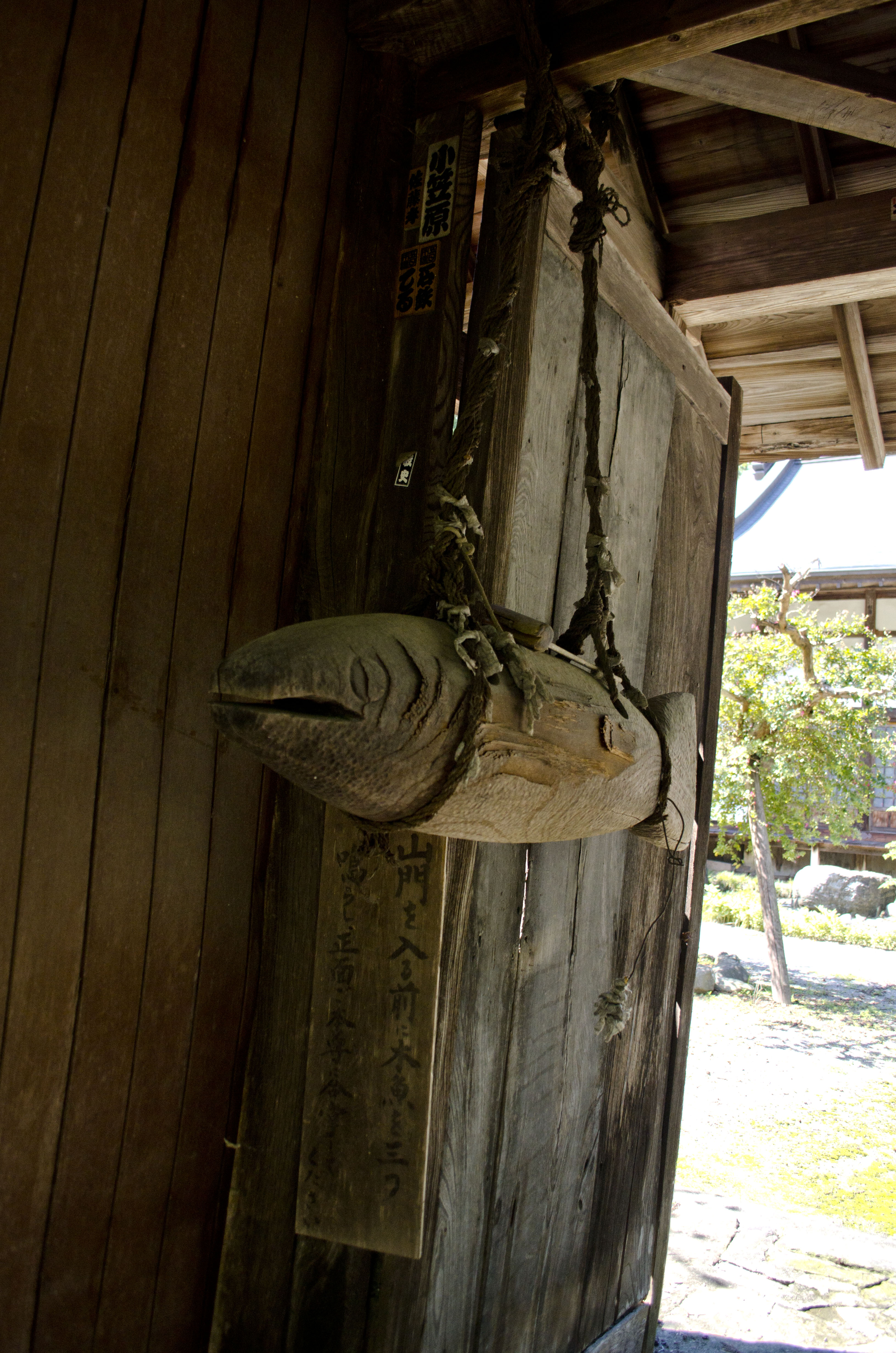
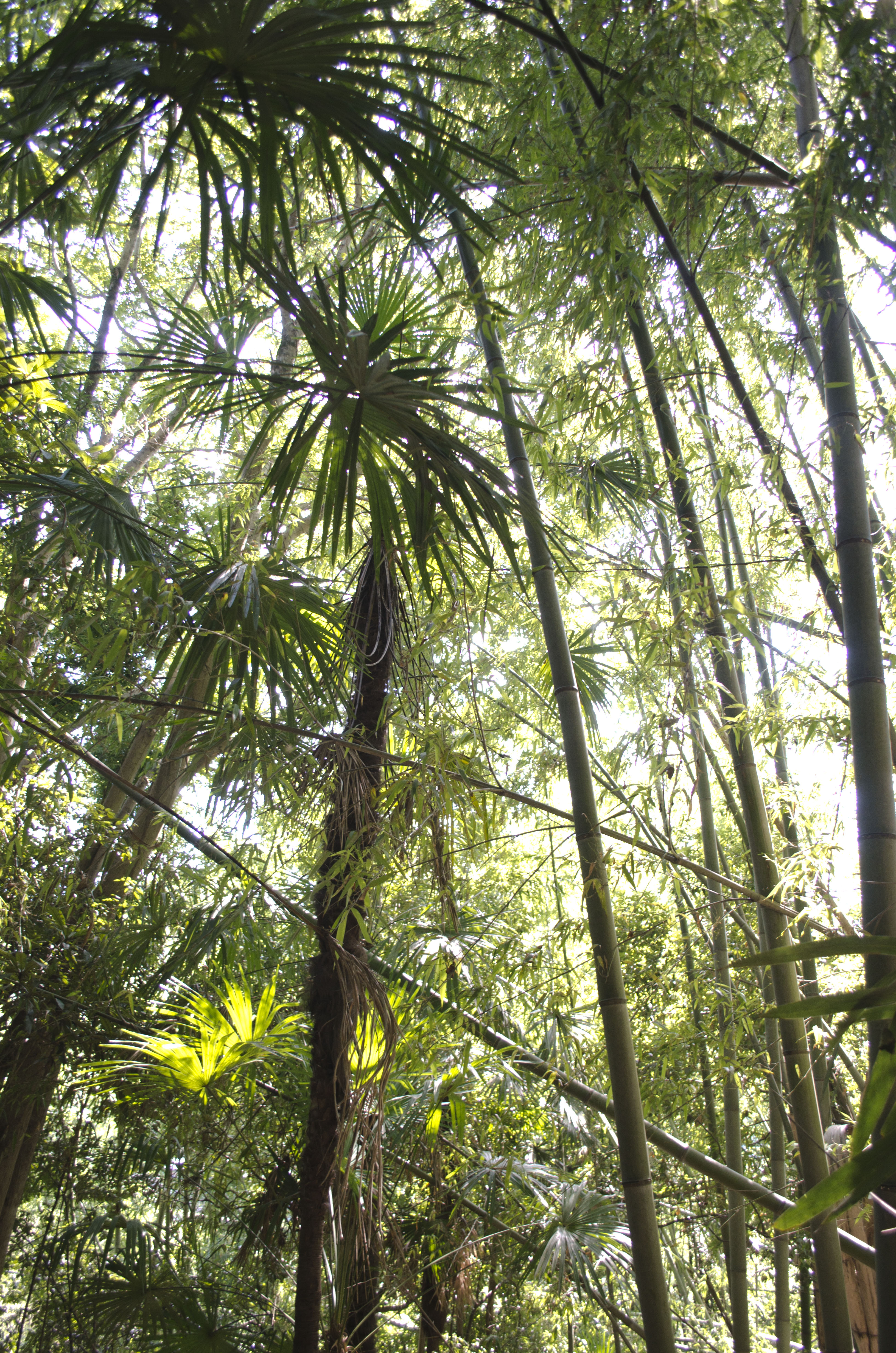
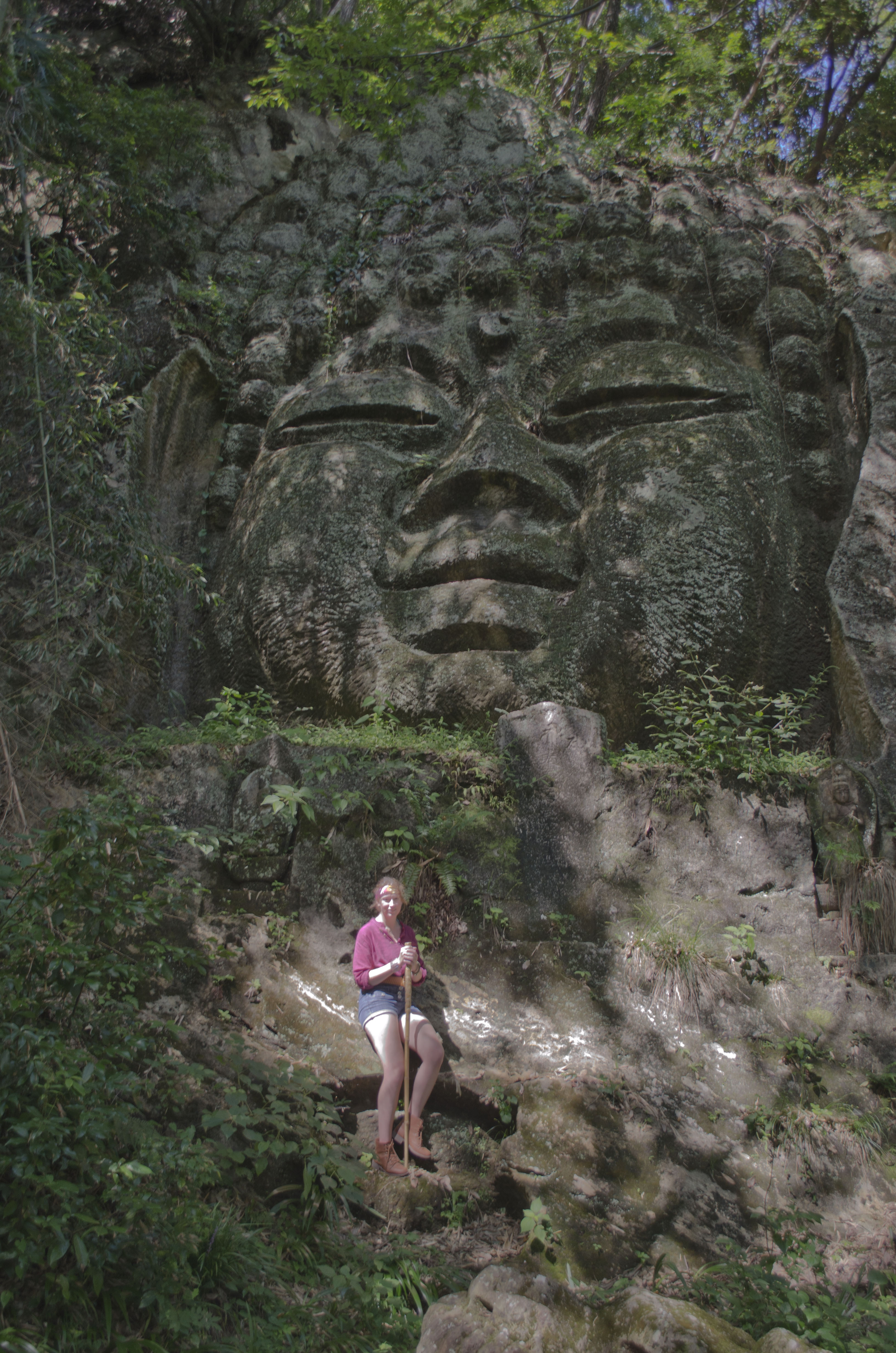
The door-hanging fish, the face in the mountain, and the bamboo forest.
In front of the face, there is a carved creatures head that protrudes from the ground by about a meter, and is about a meter and a half in length. and a turtle of about equal size to the right of the statue, that would be otherwise unseen by the amount of growth that’s growing the rock.
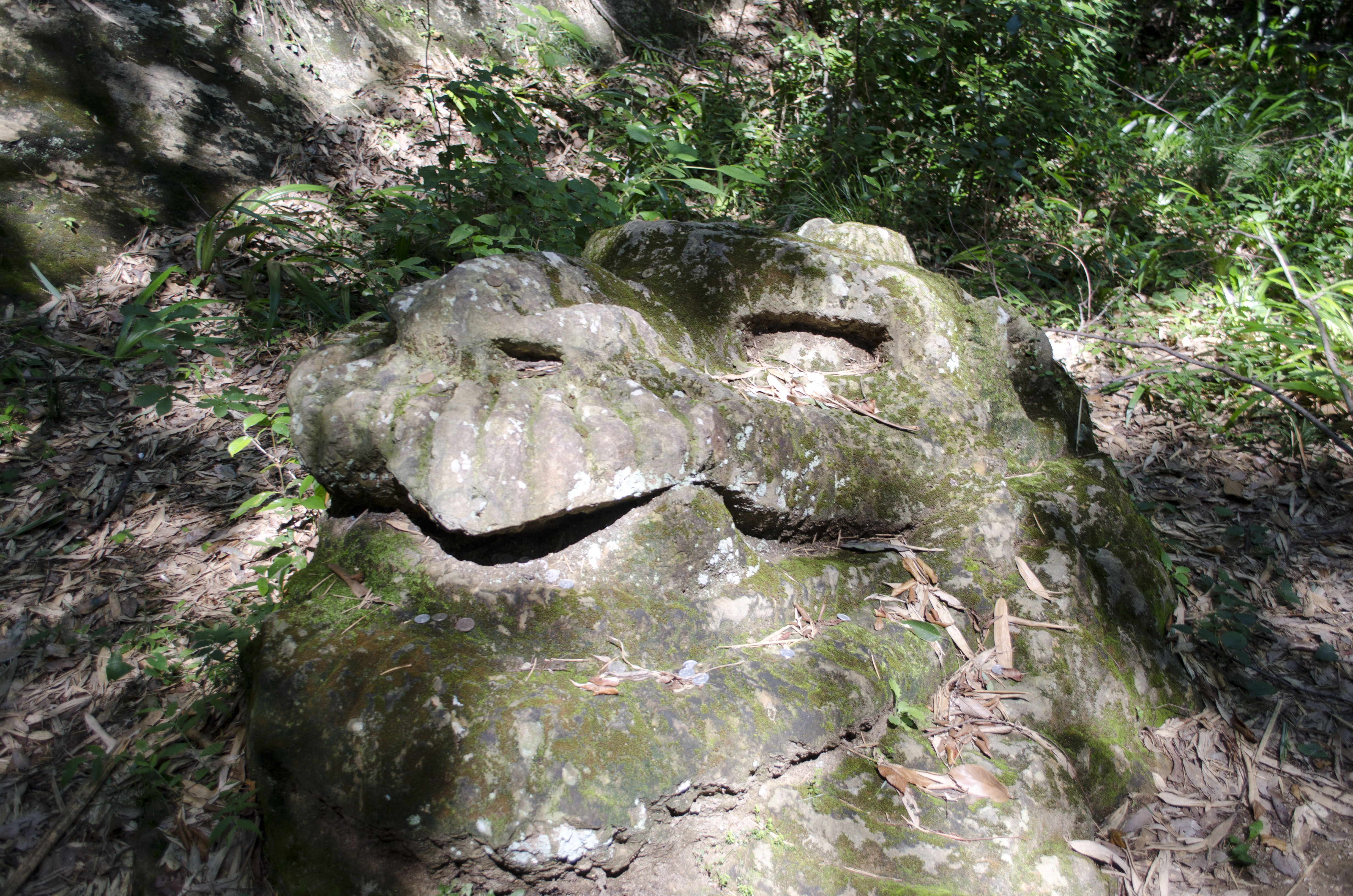
The creature
 TravelGypsea
These are such gorgeous photos, Kiki!!! I’m so glad you’re updating your blog again–I love reading about your adventures!!!
XOXOXO
Sarah
Thanks Sarah! Im glad you like it! =)