Hey Everyone! Sorry for the delayed post! (You’ll understand by the 3rd paragraph.) I will have an aditional post soon.
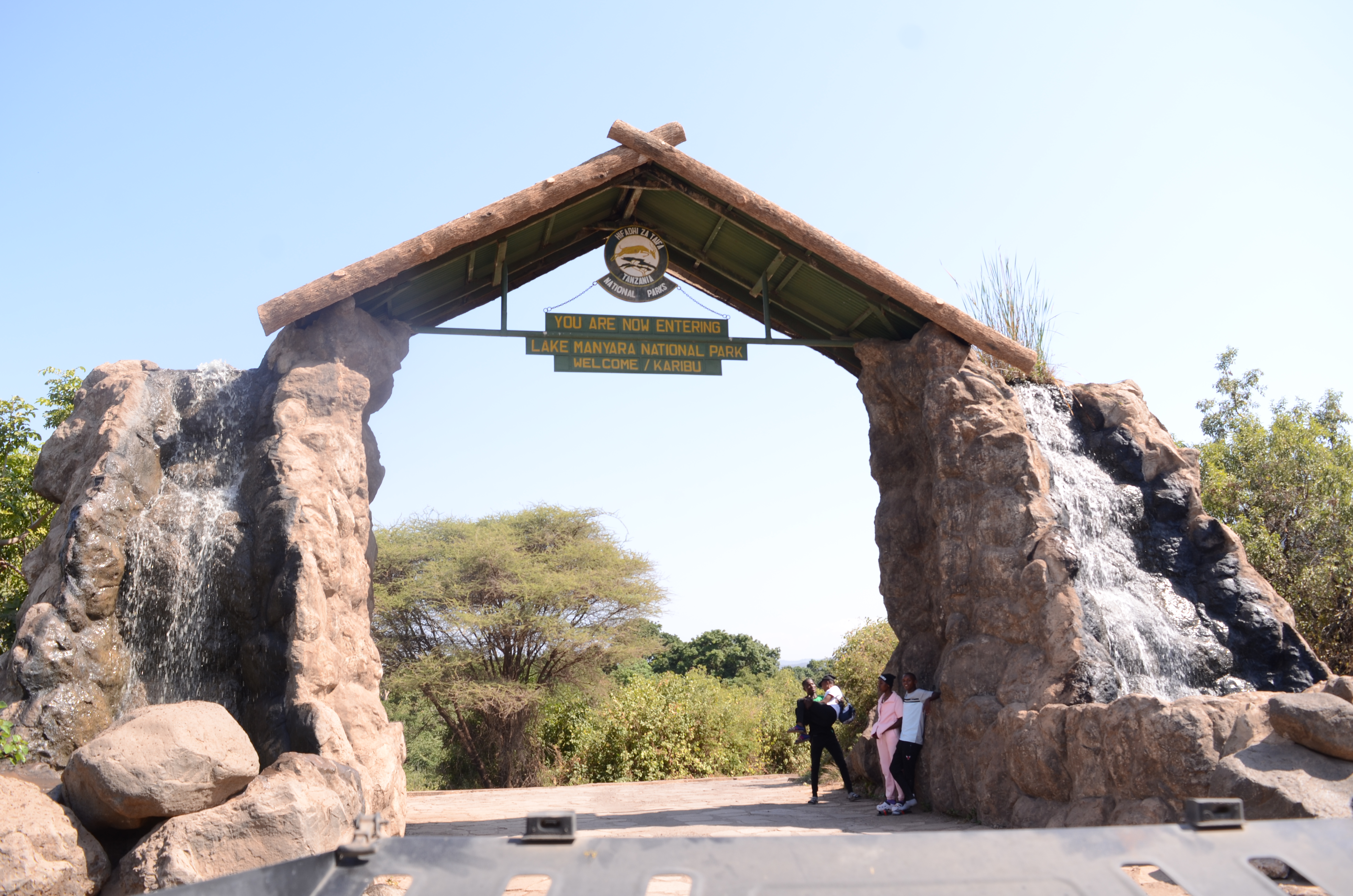
Leaving Mto Wa Mbu we drove past lake manyara National Park and stopped at an overlook of the lake and valley below. The steep slopes of the mountains, homing Lake Manyara’s tree climbing lions, make the beautiful greenery feel sinister. Photos were taken, hagglers dodged, and back into the safari vehicle to continue our adventure.
We stopped for a pit stop at a large art market, where we could keep our haggling skills tuned, and I completed most of my Christmas shopping. I would like to take the opportunity to give a shout out to one of our comrades, Doug, who I found in amongst the wooden carved hippopotamuses. I comment on his good find, and the musical-rolodex talent that he is, asks me if I ever heard the Christmas song “I want a Hippopotamus for Christmas”?
This is one of my FAVOURITE songs… I remember being a kid hanging out with my grandmother in Florida and she gave me a bright green hippo stuffed animal, taught me that song (she loved Sherley Temple… and Giraffes, more on that later.)
We break into song there in the middle of the store. He had got his wife a hippopotamus for Christmas, which I find so stinkin’ sweet. (Of course putting this into a post I am going to wait to put this on the blog until AFTER Christmas.)
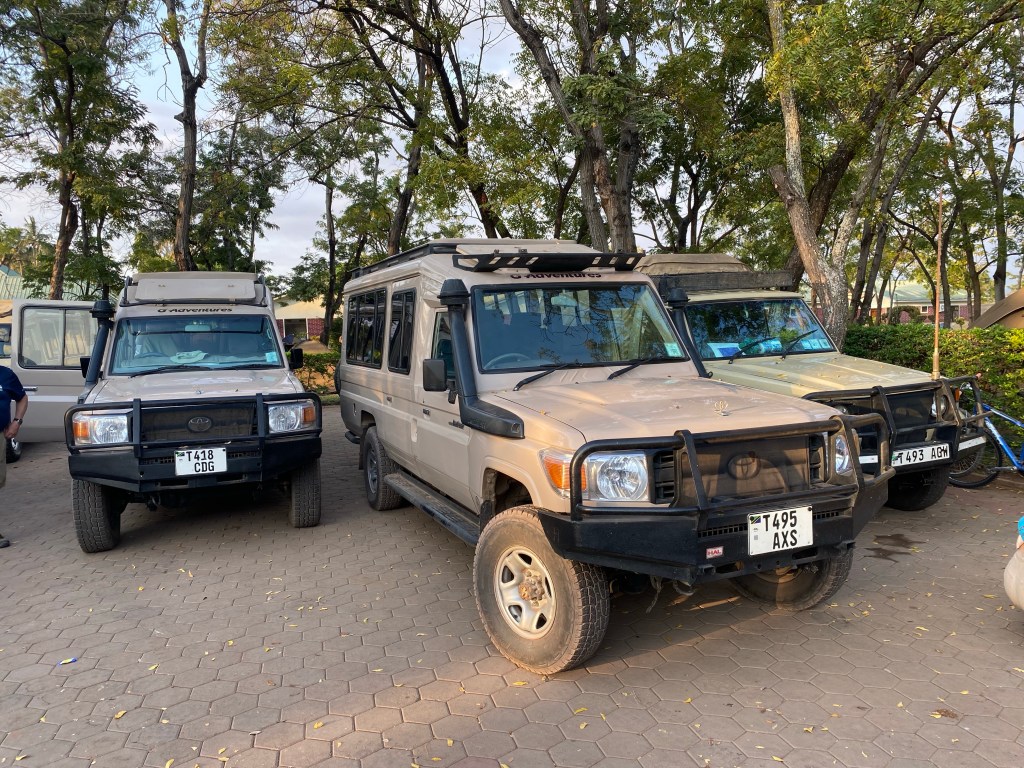
We load back up into the safari vehicles (a few souvenirs and charismas presents heavier) and continue through to Ngorongoro Conservation area. At the large gateway to the area we stop to confirm our tour add on of the hot air balloon over the Serengeti. Then we set off into the wilderness. Fun Tip: the Tinga Tinga art style is characteristic of East Africa/Tanzania. You can get a small painting and they will take them off the frames for you and roll them up so that they can be transported home.

The dry season. The bumpy roads during the dry season….. This is where I HIGHLY recommend using a mask/buff because of how dusty it got inside the car. One of my carmates was recovering from a cough, and I’m sure that the dust didn’t help at all. I had a buff on my face, one over my camera and lens, built into my sun shirt, there was a lot of dust protection and it still made an issue.

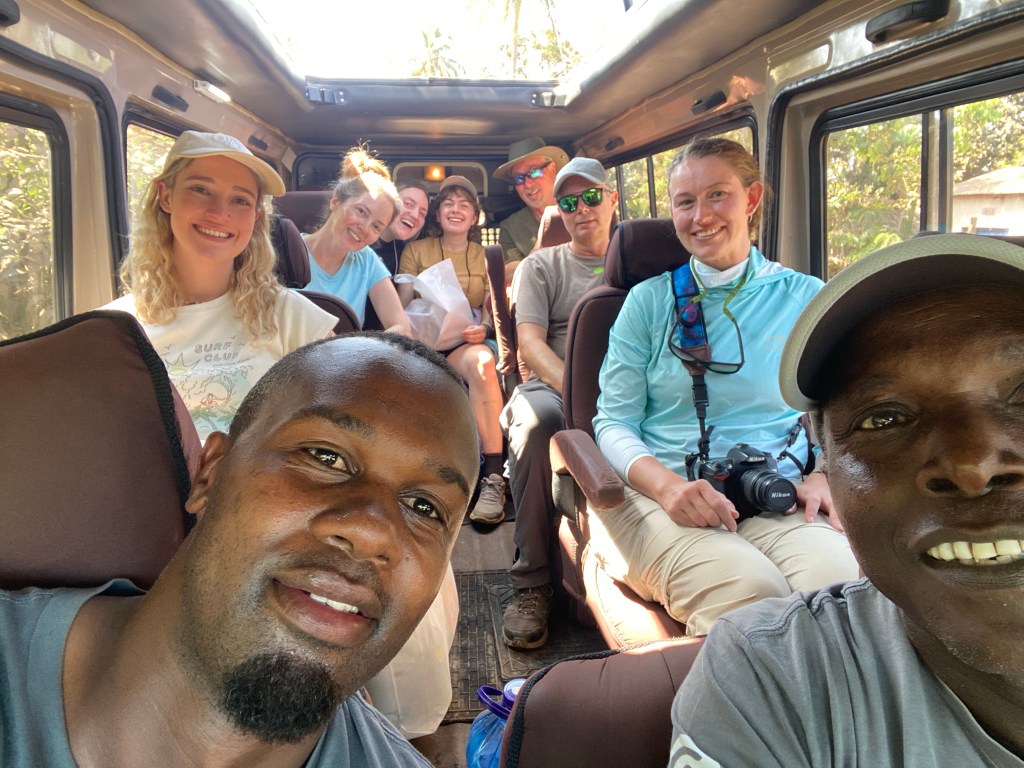
As someone who gets car sick, this was the worst trip to forget Dramamine or ginger pills. but I did, so I want to give another MASSIVE shout out to all the car buddies, for allowing us carsick people to sit further up. I promise for future travel companions, I have learned my lesson and have an emergency stash already in my travel case.
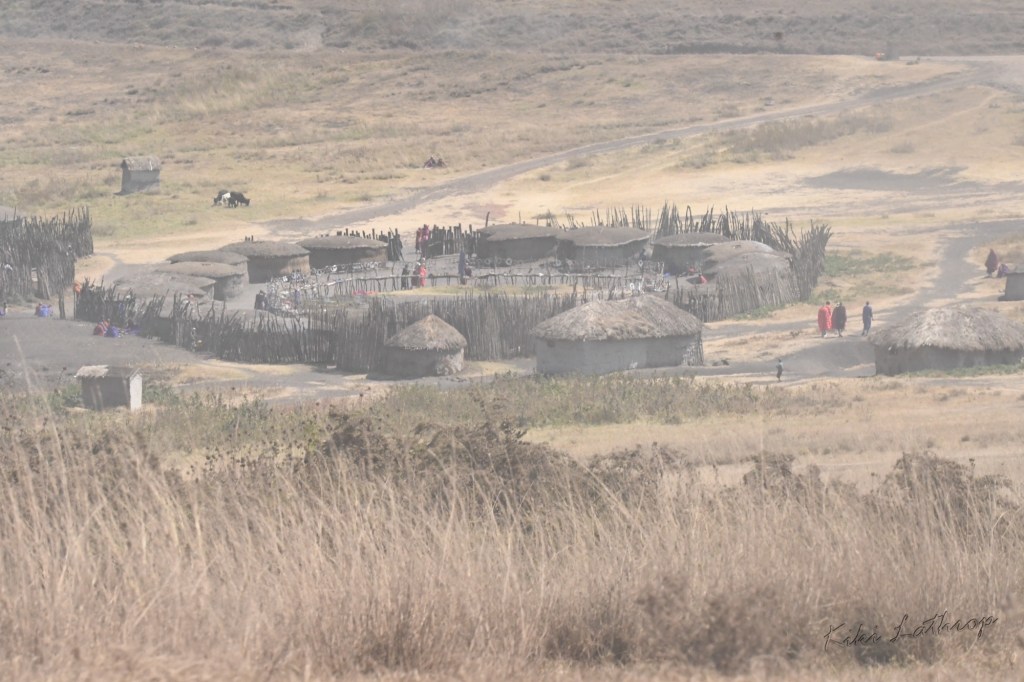
We pass Maasai villages with tall wooden fences to keep out the animals higher up the food chain. Dry short grass in all directions seemed desolate. Hamdami, our guide, told us that during the wet season that the area is known for the great migration with thousands of animals, especially wildebeest, and the lions would come to hunt.
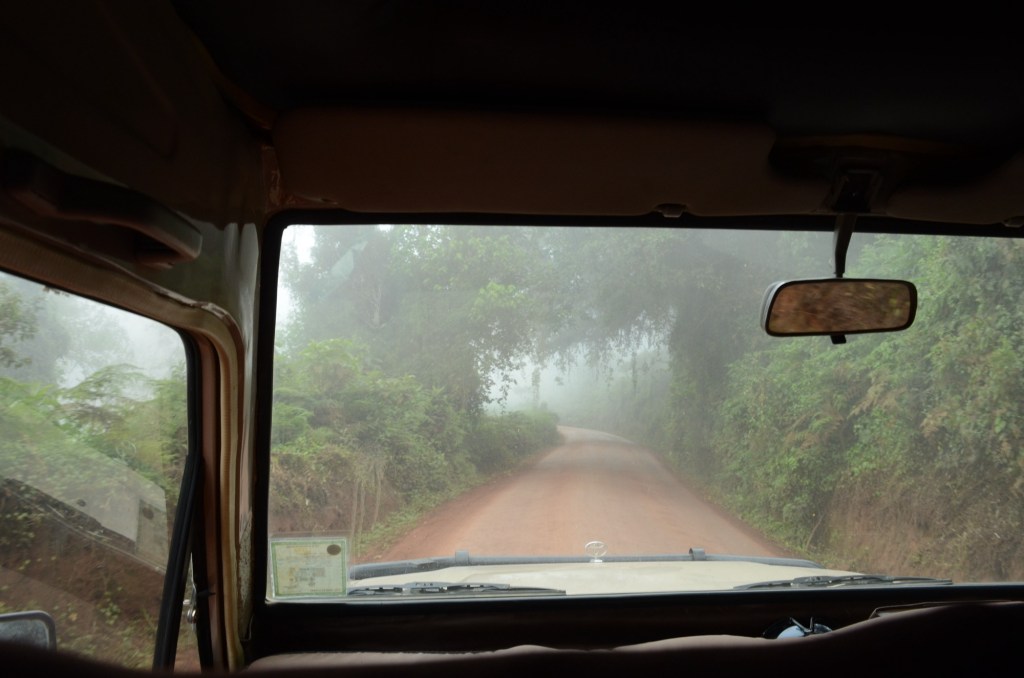
Up the crater bank through fog and vines that made me think we were transporting to another world. If Pandorans walked out of the brush, and we were transported to the floating mountains from Avatar, I wouldn’t have been surprised. At the top of the crater we stop for a quick photo op at the overlook. We would be traveling into the crater and camping along the rim a few days later. We traveled down the oposite side, back into the plains.
This is the area that gives the Serengeti its meaning of “the endless plain”, there is a quick reststop that has everything that an anthropology nerd like myself would want. The monument in the front supports 2 GIANT early hominid skulls. The area made famous in the anthropology world when Mary and Louis Leaky discovered Homo halibus, showing that our earliest anscestors were in the area, and by the Laetoli Footprints which proved bipedalism (that we walk upright). Other notable finds include Zinjanthropus boisei, aka Austrolopithicus boisei. From the monument you can see in the distance the Mary Leaky museum. The museum hosts current archaeological excavation and research, and has a replica of the laitoli footprints which are 3.7 million years old. They had to be reburied to help preserve them, hints why they have a replica. We weren’t able to stop at the museum, but its definitely on my list for next time.
This monument area also has the main gate for the Serengeti and national park sign. We were officially in the Serengeti!
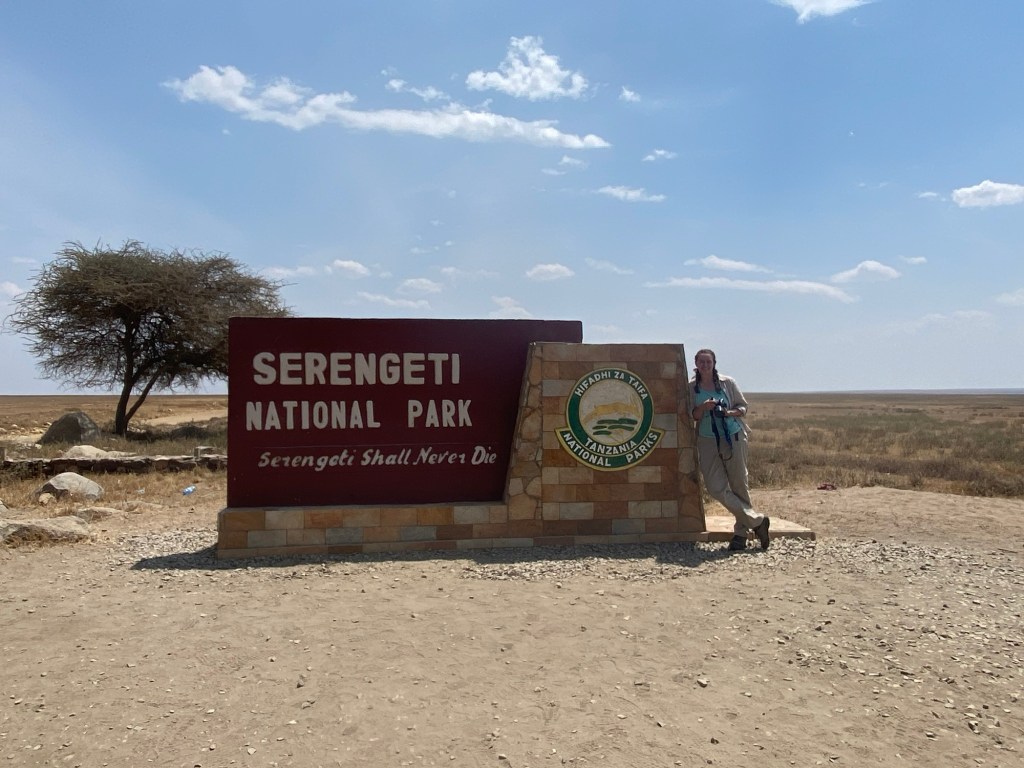
The miles of dust-blown washboard road into the vast wilderness with little life habitating the landscape, and the occational wildabeast skull that had been drug around by the animals at night, remind me that here I am bottom of the food chain. Our guide reminded us that this open plane of dry grasses was lush and teeming with life during the rainy season, beign a peak place on the ‘Great Migration’. Thousands of wildabeast travel through, grazing and dropping calves as they go.

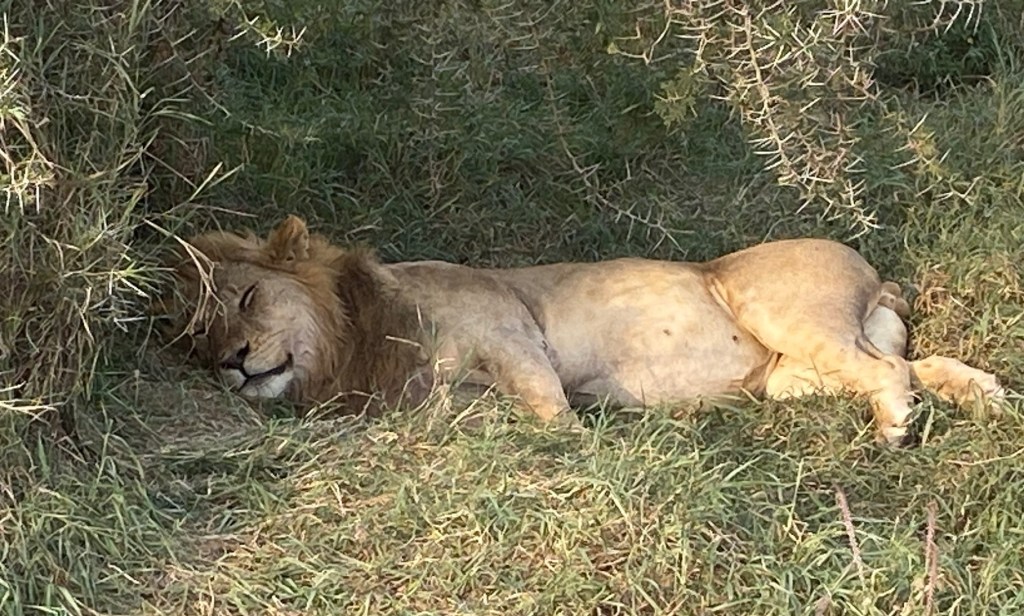
Once in the park we stopped at the rest station/shop/picnic area for lunch. The walkway from the parkinglot of safari vehicles looked much like you would see in most of the national parks around the US. Well kept, nice landscaping with flowers beside the paths to the picnic area. The small hiking path with yellow cation tape that told passers by to ‘Keep out’ in multiple languages seemed no different than a the park tennants doing maitnance behind the building for the bathroom. I stood at the caution tape and tried to see what people were gawking at as they passed. Thats when our guide points up the path to the top of a rock, only about 30 feet (10m) away. I would have missed the Lion if it wasn’t that the rock was… well… Fluffy. And to seperate the hundreds of tourists from the apex preditor – a caution tape. Mental Note: REALLY pay attention to signs. They are NOT a suggestion.

By the end of the fist day in the Serengeti we had seen 4 of the ‘Big 5’. This is aparently rare for the serengeti, especially in the dry season. The Lion were plentiful, and even lounging in one of the trees with a whole mess of cubs. The one at the picnic area was the most surprising though.
A Black Rino walked away from us some distance away. At this point we asked our drivers about the Rino that only has 2 of its species left. Those are the Northern White Rino, are under full-time armmed guard, and by definition extinct since the last two are female. Needless to say, they dont get tourists out to visit them in an effort to protect their location from pochers. The Black Rino is not too much better off with only 6,000 left.
The Elephant we didnt see as much until we were deep into the serengeti. There were yearlings out wondering about and keeping up with mum as they walked determined to some unknown location.
Water Buffalo were a little more elusive, and a heard had walked passed us on our way out of the Ngorongoro Crater area.

4 of the 5, all that was missing was the leopard.
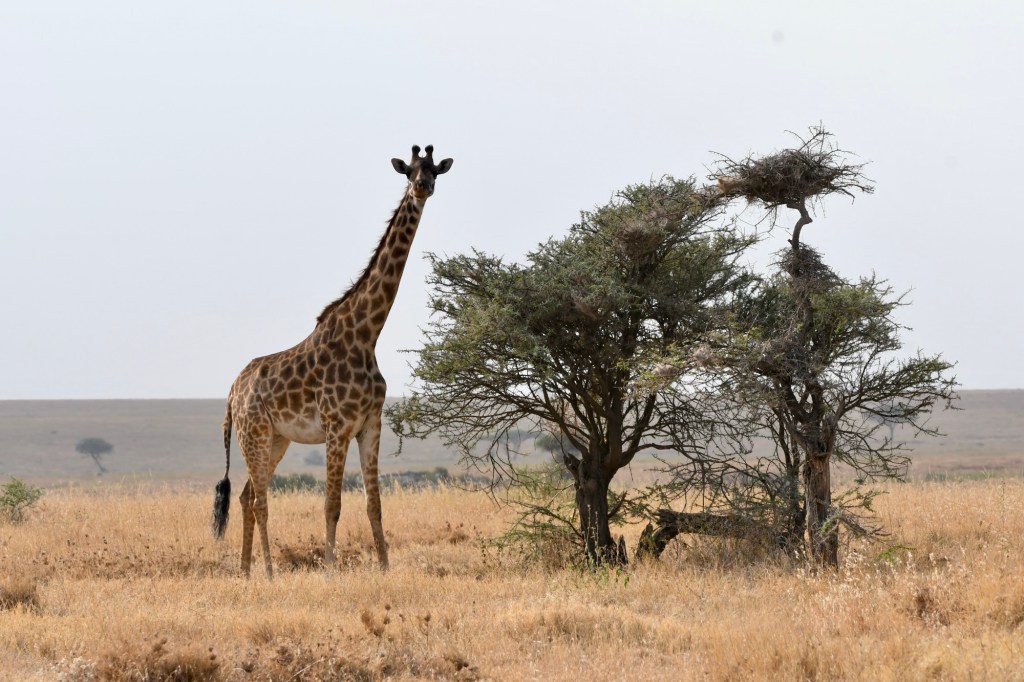
The Big 5 was a rating system that was created by hunters as the 5 most deadly that were more likely to kill you than you to kill them. Our guides being more into conservation told us about some other “5’s”; the Ugly 5 – Hyena, Warthog, Vulture, Wildabeast, and Marabou Stork. Thats when Valance, our driver, and we decided to start coming up with a ‘pretty 5’; The DikDik, Geraffe, Hippo, Zebra, Crowned Crane… Of course these five kept changing throughout the trip since there are a LOT of cute animals in the Serengeti.
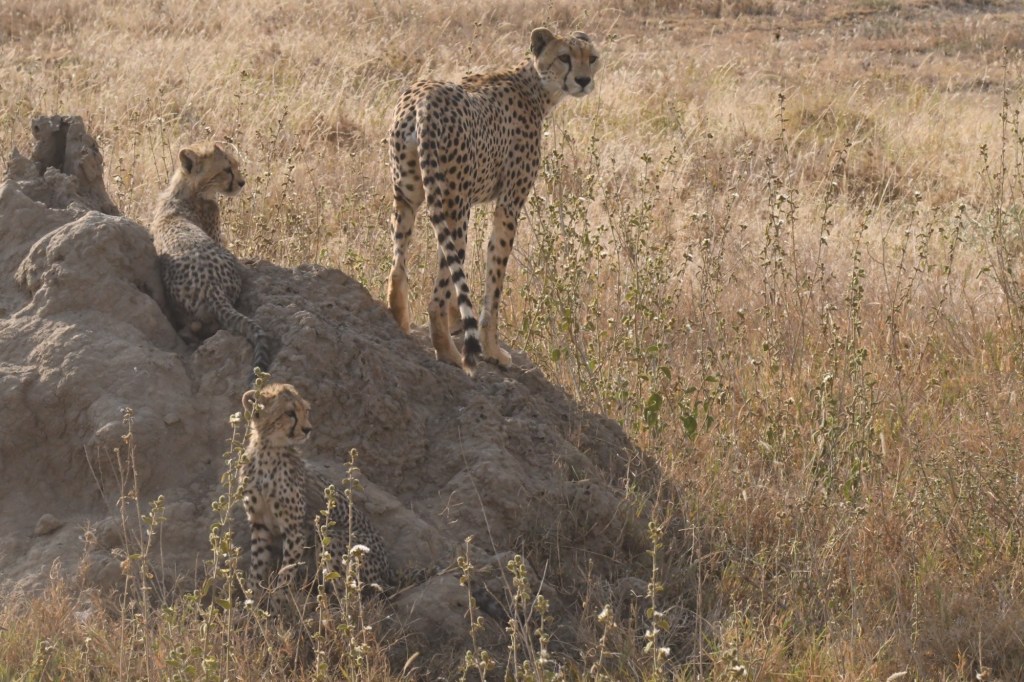
The first day we also got lucky enough to see A cheetah with its 2 cubs practically posing for us!
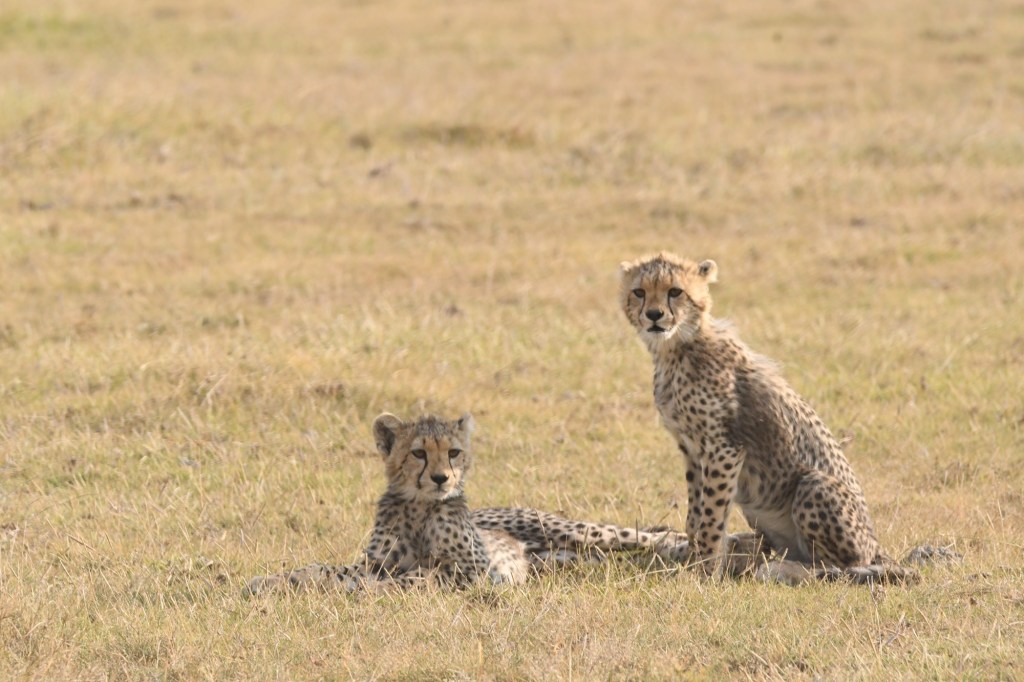
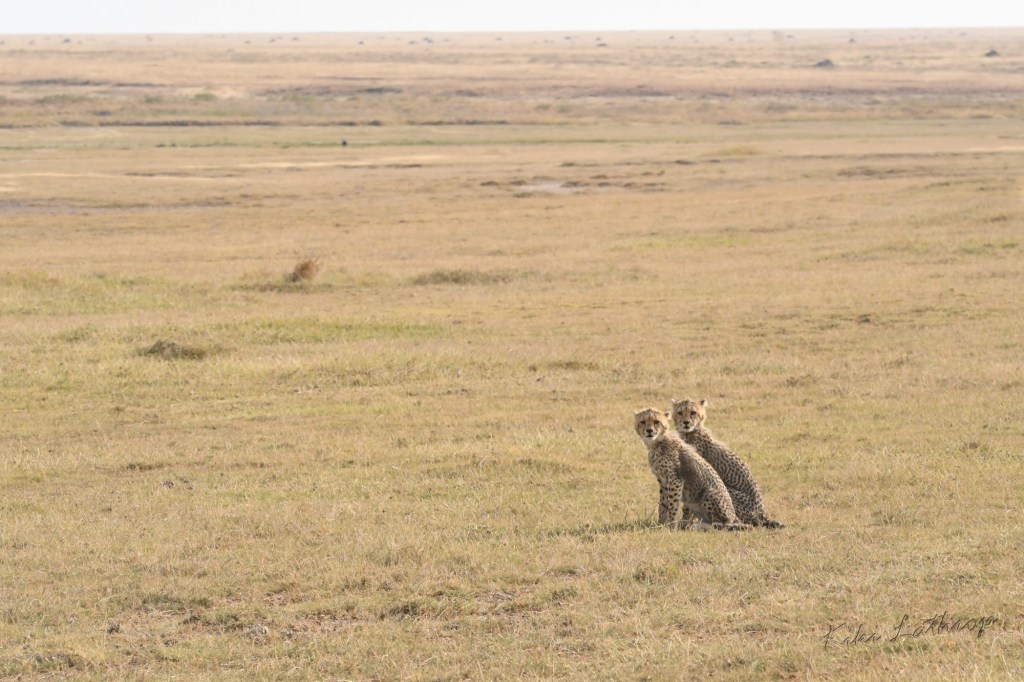
Once we hit a certain point in the serengeti, the sun was dropping low and we had to get to camp. Valance picked up some speed, and we watched as the sun kissed the horizon turning the sky a firey pink that looked like something out of Lion King.

Our Crew had been cooking an AMAZING dinner, and our mess hall at the camp had wire fencing over the windows, It also had some decent space from the camp cook area, the bathrooms and the tent area, miking almost a square, with the cars pulling in between the tents and the bathrooms.

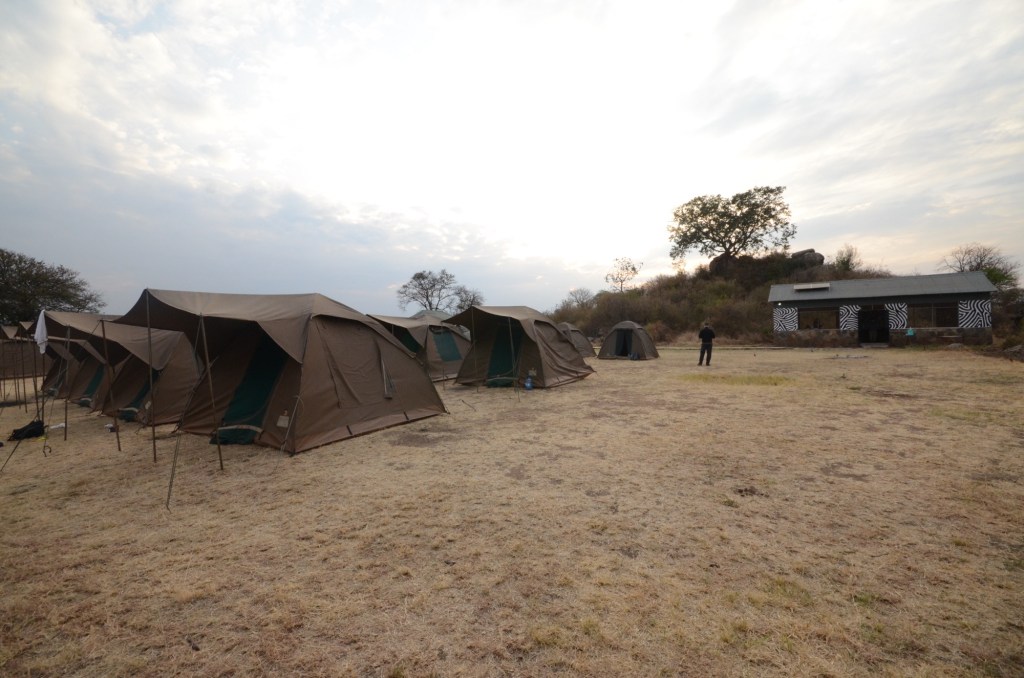
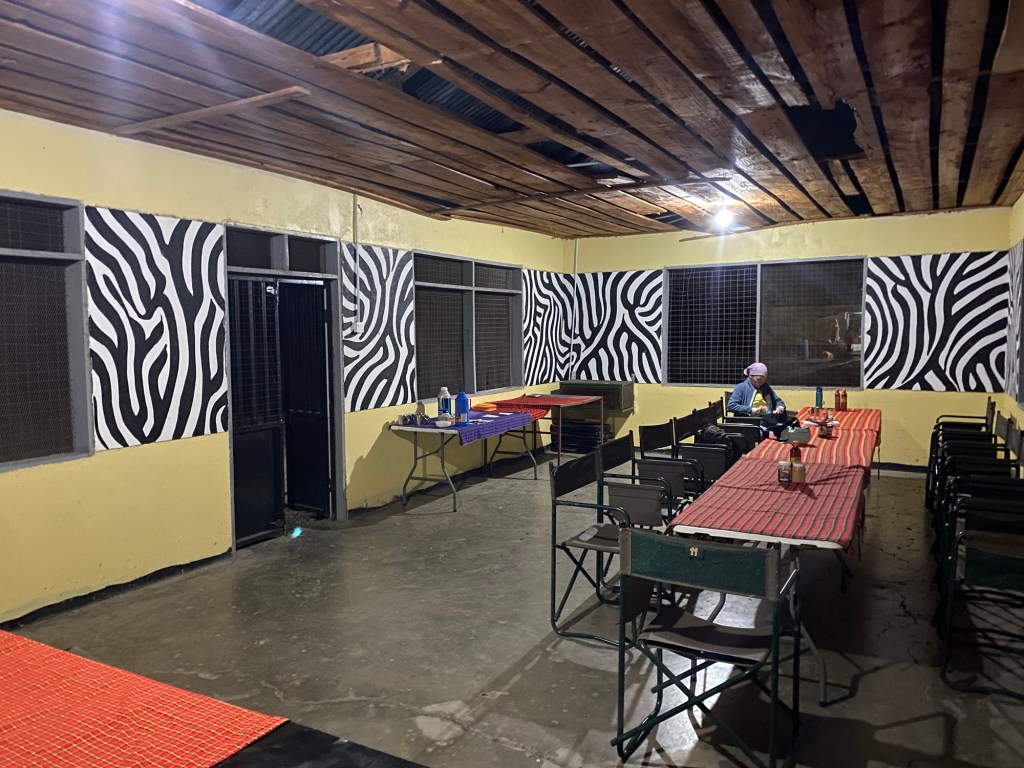
After dinner and some journaling it was time for bed before the big Balloon Ride the next morning with Serengeti Balloon Safaris. I grabbed my headlight and shined it around before venturing in any direction before leaving the safety of a building or my tent. If you see eyes and they are yellow, ehhh could be dangerous, if they are red… THEY ARE Dangerous. Remember this for next time…

Next time…
Wakign up early to a puddle of lions on the way to the hot air balloon, Complete the “Big 5” and my bathroom adventure where I saw eyes.


 TravelGypsea