A week of Florida, pt 1

We get into the airport and mum, in her bright purple shirt, lags behind so that my brother, Cole, who is picking us up, doesn’t see her. I see him and give him a big hug and tell him I have to get something at carousel 3, ‘its big and purple and you cant miss it.’ He asked if I killed Barney, to which I told him I was bringing his corpse. I noticed a few people with tilted heads, eavesdropping onto the otherwise bazaar conversation. That is when mum comes up behind us and asks “found it yet?” My brother jumps back yelling a startled profanity, then bounds forward squeaking “Mama!” Wrapping all 6’3″ of pure muscle around her. You could tell who in the vicinity was eavesdropping, because they were now laughing. Our first surprise was a success. We now had my dad, and then my sister on her return from being out of town a few days later.
My brother brought us to my sisters boyfriends apartment for the night, since they were both gone and it was close to the airport. Once we got there, my brother called up my sisters boyfriend, who was out of town and had him give us true “audio tour” of the apartment. We go through a few rooms and in the final room we walk in to my sister, Brie, sitting in the corner. She had stayed behind to surprise us. (Apparently our slip ups were a good enough to tip off my sister, and her boyfriend knew of our plan to help coordinate.) So, the surprise was on us.
The next morning we met with my dad to go diving with the dive boat my brother works on. We met up with dad, who thought it would just be me visiting, at the dive shop. It is sufficient to say he was surprised.
We got our dive equipment from scubaworks, which was extremely fast and the people there were wonderfully helpful and friendly.
Jared, Cole’s good friend and owner of the boat, Kyalami, runs a dive boat out of Jupiter. At the dock, the iconic red lighthouse across the waterway towers above the shoreline, and sets the scene for our nautical adventure. The trip was amazing; sea turtles, and reef fish dotted the reef.
Even though we were diving on a Friday, I found out about ‘lazy Sundays’, a Kyalami original event. Since Kyalami means ‘at home’ in Polynesian, or ‘one with the ocean’, Jared tries to “make you feel like guests in [his] own home”. Lazy Sundays sound like they would be the weekend barbecue in the back yard. For no additional cost, the boat will go out, span a larger area of dive spots, then work up the intercoastal while firing up the barbecue on the top deck. If you find yourself in south Florida, and whether or not its Sunday, this is a great day out! Between dives we had some cut up fruit, soda and snacks, then back in for round two. The crew has the best sense of humor, and knows how to make you feel welcome. There is a playlist that is put on for going out and certain songs put on for their ‘epicness’ to send you off into the water with a ‘Dive! Dive! Dive!’

For more info on Kyalami, visit http://www.jupiterscubadiving.com

The next day, we were at the beach which had been the clearest it had been for a while. My sister who runs to the beach daily, said the turtle nests that spotted the beach had doubled over the last week. We splashed around for a while, rough housing and laughing, when a storm started rolling in. The once crowded beach only took 5 minutes to clear out.
That night it had cleared up, and my dad, brie and I loaded up into the car for a walk down on the beach. While dipping our toes in the water and shuffling through the sand, we saw a double tread-like pattern in the sand. When looking up the track, it doesn’t take long to notice the turtle clawing and throwing sand to make its nest. I set up my camera and thanked the gods for my telephoto lens.

For more info on turtle nesting/hatching, or to find a guided turtle walk to increase your chance of seeing such an amazing sight, visit http://www.nova.edu/ocean/seaturtles/walk-hatchling-release.html
Cannibalism: How To Kill A Conversation

As we are skimming the tops of the clouds and the plane is bouncing around just enough to put my nerves on edge, I figured I would get started on my next post, as I seemed to have disappeared for the last two weeks.
It all began a week ago…
I had a good friend visit for a weekend, then realized I had massive amounts of packing that I had yet to do. Shoving, squishing, and shifting, I managed to get the entire contents of my apartment into my Subaru. After strapping the barstools to the roof, I turned in my key. It was the most amazing thing – I was out and, like Bilbo, going on an adventure. I wasn’t going to miss my apartment, my ‘nook’ in the mountains, and my friends would stay in touch. I had this wave of calm. That pure, genuine feeling that whatever is going to happen is exactly what’s supposed to happen.
So yesterday, after my last day of work, I jumped into the car, and drove. Two hours, a caffeine crash, and unloading the car later, I flopped on my bed, ready for the first stint of traveling.
A family friend offered to drive my mother and I to the airport. My siblings and father, who I am going to visit before my big departure, know nothing of my mum coming on this trip with me. (And hopefully have not figured it out after the dozen slip ups in the last few weeks.)
Our friend had mentioned something about eating Guinea pigs, which some how led my brain on the rollercoaster that is my thought process. I started to think ‘where do they get their name, it can’t be New Guinea? No they eat Guinea pigs in south america. Its dog they eat in New Guinea.’ This reminded me of my friend in high school who had met a man that remembered when there were cannibals there. Somehow, like a true anthropologist, I was able to squeeze cannibalism into the conversation. After a few comments and grunts of agreement, the conversation had fizzled into the awkward ‘what-do-we-say-about-cannibalism?’ silence.
The flight’s unusual in that it is ‘typical’. I am not used to the kids two seats up wailing, or the heavy turbulence. I am what my family calls the ‘lucky traveler’. (Knock on wood.) I was able to spend a week in Fiji on $75, and have a track record of getting the seat that the person next to me either a) never shows, or b) is really nice and smells lovely. While Mum is really nice and smells lovely, I still have the window with amazing views on one side, her on the other.  Beside her is a man from Florida. A big bushy mustache and social disposition, which is welcomed in all other circumstances, isn’t high on my list of activities during take off and landing. (I am usually white knuckling the arm rests, knowing the death grip would ensure that I would survive in any event that may happen. Of course we were given seats at the back of the plane, which my mum pointed out is the part of the plane that usually has the least amount of damage in a crash. Mixed with the rockclimber grip on the armrest, I’m invincible at that point.)
After giving the story of living on the boat, I start to tune out and focus on looking out the small window at the wing of the plane. By-golly, if something was going to happen during takeoff, I was going to be the first to know. Mum tries to pull me out of my stare down with the wing by asking me about my friend I will be staying with when I first get to Australia. It nearly works, and then I get the questions from mustache guy about my degree in anthropology/archaeology. For a brief moment, I will admit trying to figure out how to fit in cannibalism.
Once in the air, the turbulence was light, but frequent. I have thought about a comedian I listened to on the internet radio, saying something about how flying is like humans slapping god in the face. We overcame any evolutionary roadblock on that front, and how would he/she/it/they feel about that? I can’t help but look out the window and say a little silent prayer that runs along the lines of ‘yo god. So, you know that was a joke right?’
Its not that I’m afraid of flying, that’s why I love window seats. I love looking down at earth and feeling like this is as close to being an astronaught as I will get for a while. (I’m going to be optimistic in my future as a space archaeologist.) I just think I would do better in orbit (which is defined as ‘constant free fall’) as opposed to the rattle of turbulence that makes me feel like I’m in a human maraca.

28 days

OLYMPUS DIGITAL CAMERA

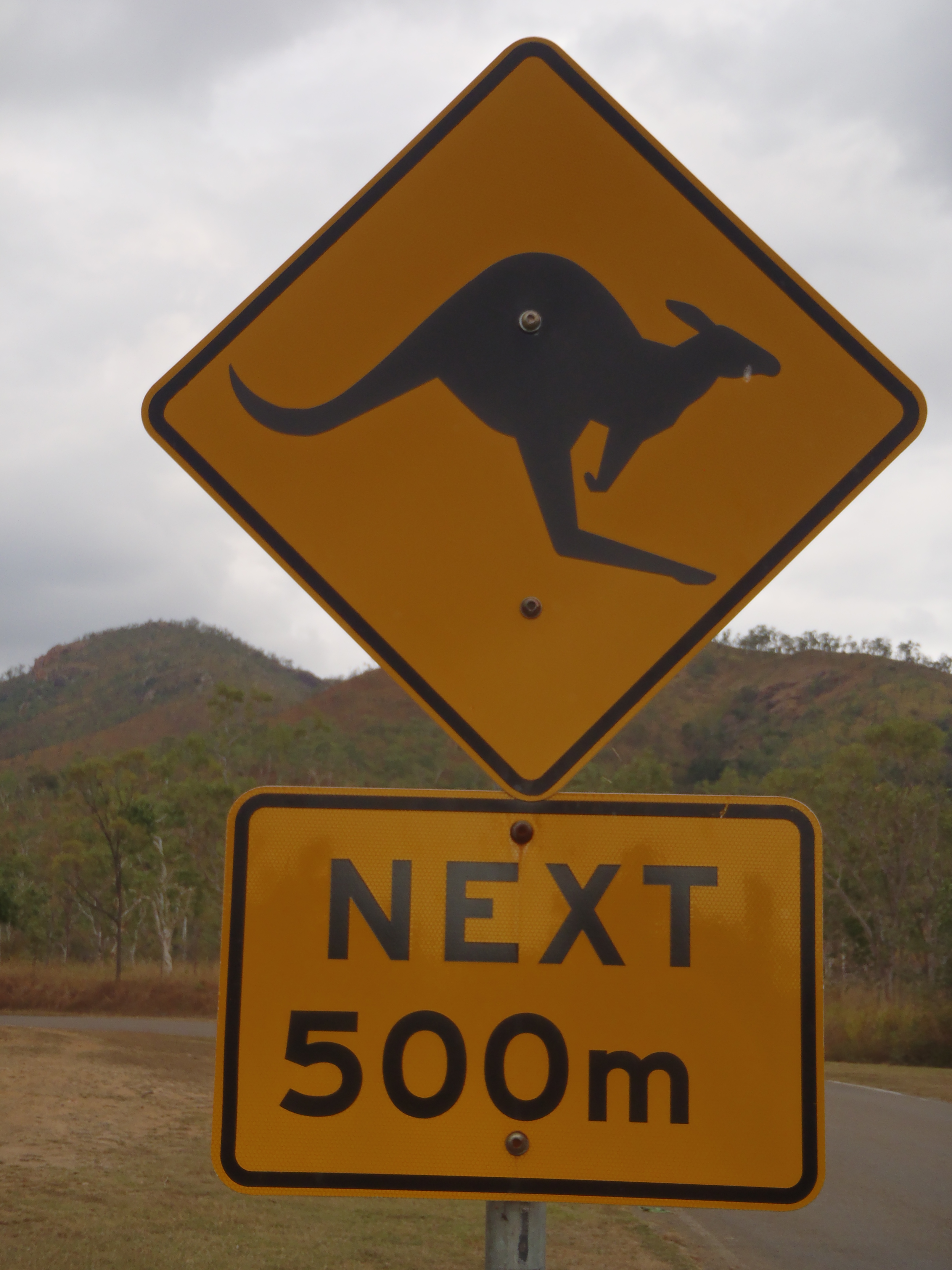
28 is the number of days until my flight for Australia. 4 weeks exactly until I board the plane bound to what is referred to as ‘the most dangerous place on earth’. This is understandable, as most of its inhabitants are vicious killing machines, and I’m not talking about the rugby fans (hoolagans?)
Last time I was there, I was living on campus while studying abroad, and had the pleasant view of wallabies bounding beneath my balcony, and the parrots that would perch on my balcony to wake me up at 4am. (I don’t think I have ever had a bad thought toward birds until that morning.) But they weren’t dangerous. I also got to see the snakeskin of a growing King Brown snake that had been shed by the road, (remember the commercial where Steve Irwin pretends to get bit by the most venomous snake and keels over. Yeah, that’s the one.)
Even when exposed to such unique creatures, I had learned a few things that served, and will serve to help me survive the harsh land scape. Or at the very least, provide some interesting ‘tid-bits’ that make for some interesting commentary on our own landscape.

Outback 20x30

When in Australia, do as Australians do… Most of the time.

Face it. You don’t know the landscape. You don’t know what’s laying in the bush, waiting, lurking for the opportunity to bite. OK. Its not that bad.

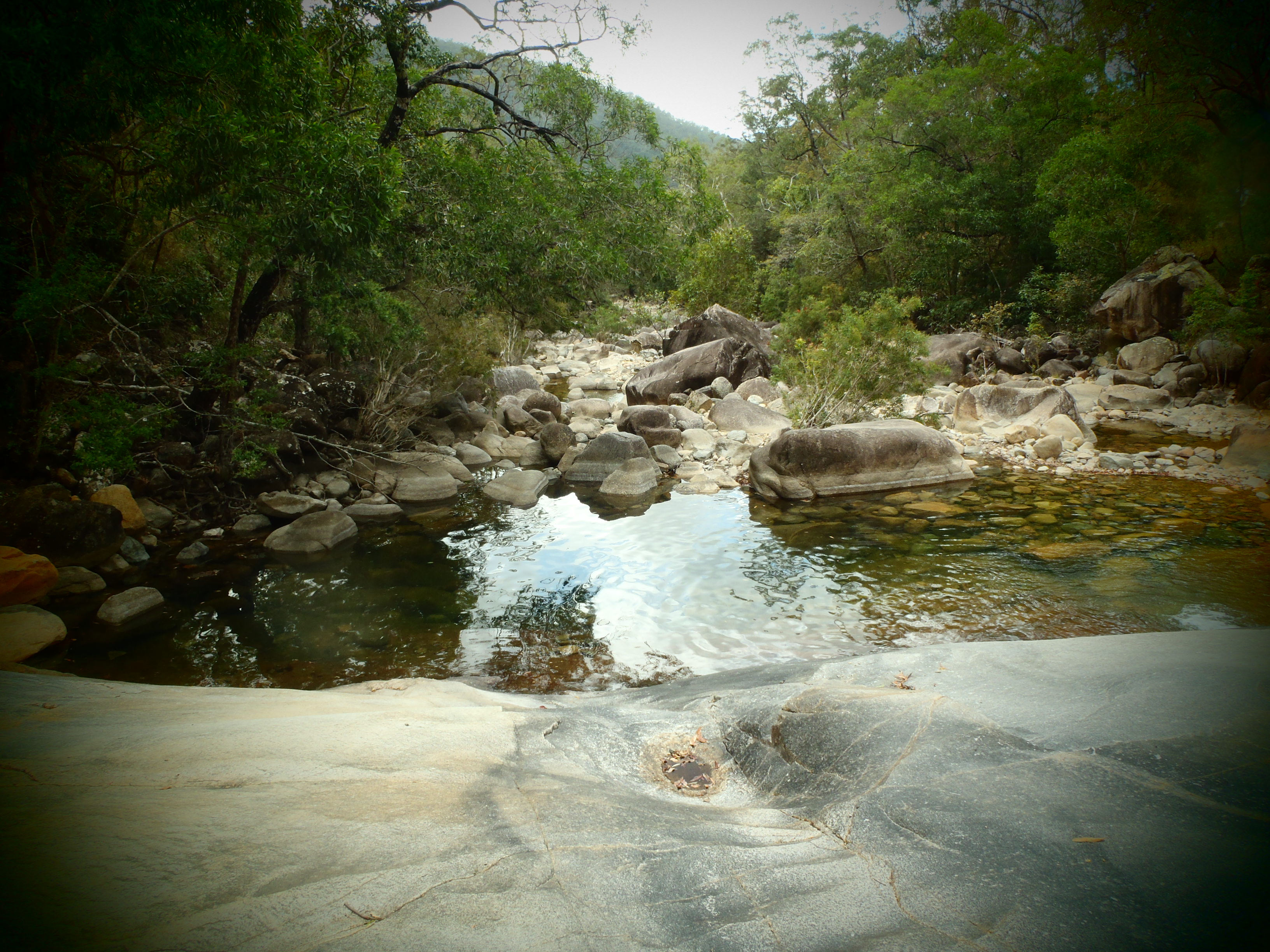
When I first went to the river, you can imagine how excited I was to go to the local swim spot. It was beautiful, the trees grew out over the water, providing a platform to do a back flip – or more often – a belly flop, from. When I had asked one of my mates about the spot, and why that one in particular, besides the convenient dock,  he said that it was a ‘safe’ swimming spot, since the two crocodiles (yes, crocs, teeth and all) lived a kilometer in each direction. The crocs are freshwater crocs (which, I am informed are “nicer” than saltwater crocs,) and as they are small, will avoid confrontation. I have spent a lot of time wondering the legitimacy of this, and if this information was meant to comfort in the same way that Drop Bears are meant to scare. (For those of you who don’t know,  Drop Bears look just like Koalas, but will jump out of trees to eat human faces.)

In my Australian literature class, we were discussing a story about a boy who gets lost in the outback and (Spoilers!) Dies. This *cough* no-so-encouraging story brought up some questions from the foreigners, such as “how do I stay alive?”. One of my classmates, who was an outdoors-man, gave me a couple tips; Don’t go complacent that trees offer shelter, falling tree branches kill more people each year than shark or croc attacks combined.  It can happen without any notice. Plunk! out of the tree, onto you. The next bit surprised me, only because it was different than what I am used to. I lived in Colorado long enough to have learned that if you are lost, you can build a water filter, then boil water, and might be drinkable. Our good friend Giardia, the parasite, infest most open water sources, but in a life-or-death situation, you’ll take your chances. In Australia, most of what can harm you, you can see. Microscopic lifeforms are few and far between, making most water sources drinkable as-is. What’s the catch? in areas where the water pools, fresh water crocs will go from pool to pool to eat the fish.

Summary: don’t sleep under trees, or too close to the stream.

OLYMPUS DIGITAL CAMERA

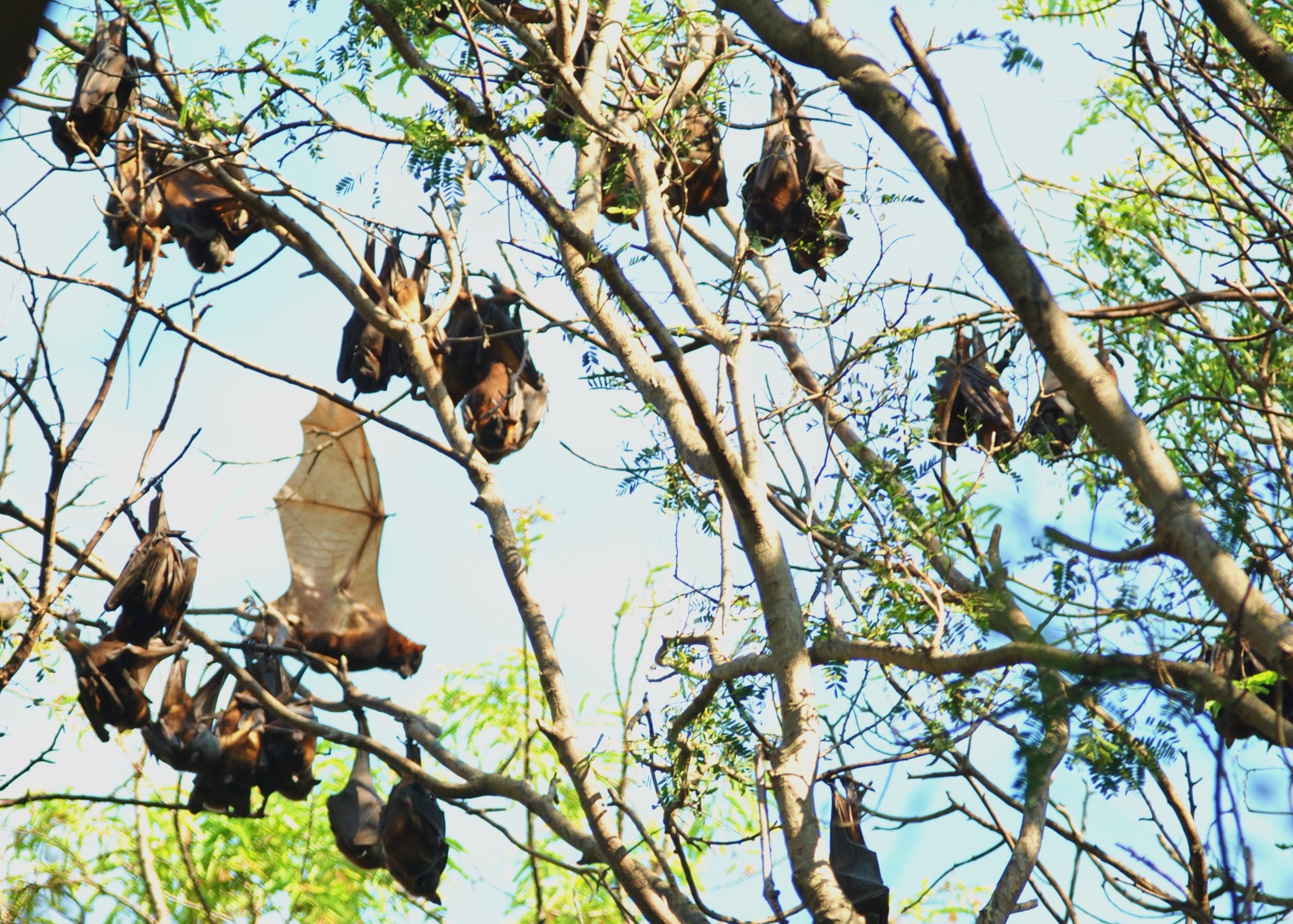
The last “fun fact” is while there would be a number of reasons you wouldn’t want to be bit my one of the animals down there, rabies isn’t on the list of concerns. Rabies doesn’t exist. (Points to the harsh agricultural and animal guidelines for getting into the country.) The next closest thing that exists there is a disease that the flying foxes carry. The only way you can contract it – their excrement, and there is no cure. So don’t go playing in bat poo, and you’ll be fine.

DSC_0157 - Copy

Things You Wouldn’t Have Considered For Your Gap Year

Deep in the mountains of Colorado, nestled on the side of the range of 14-ers (14,000 ft above sea level mountains) known as the Collegiate peaks, named after the ivy league schools (Princeton, Harvard, ext.), is Buena Vista.

The town is rich in history, from the old brothel of Cock-eyed Liz, to the locals pronouncing the name wrong because a German woman settled the town, there is a lot to be offered in background.

In the winter the town slows. The misty chill leaves the night streets bare and during the day, skiing is the nearest thing to an activity that draws the out-of-towners. But in the summer, the town comes alive.

The town is situated along the Arkansas river, making it rich in rafting, kayaking and river surfing, and hosts FIBARK (First In Boating the Arkansas) a festival dedicated to river sports.

Summer camps situated on the outskirts of the valley bring youth from all over America, as well as all over the world, for work. High ropes courses, river sports, swimming, horseback riding, and archery are all apart of summer life of Buena Vista. And while the town is small, every one knows everyone else, and the one street light marks the center of town, the summer festivities are unlike any others.

Over the 4th of July weekend, a parade, craft fair in the park, and a light show (as fireworks were banned this year.) But the event that drew the valley to the small center of town, was the street dance.

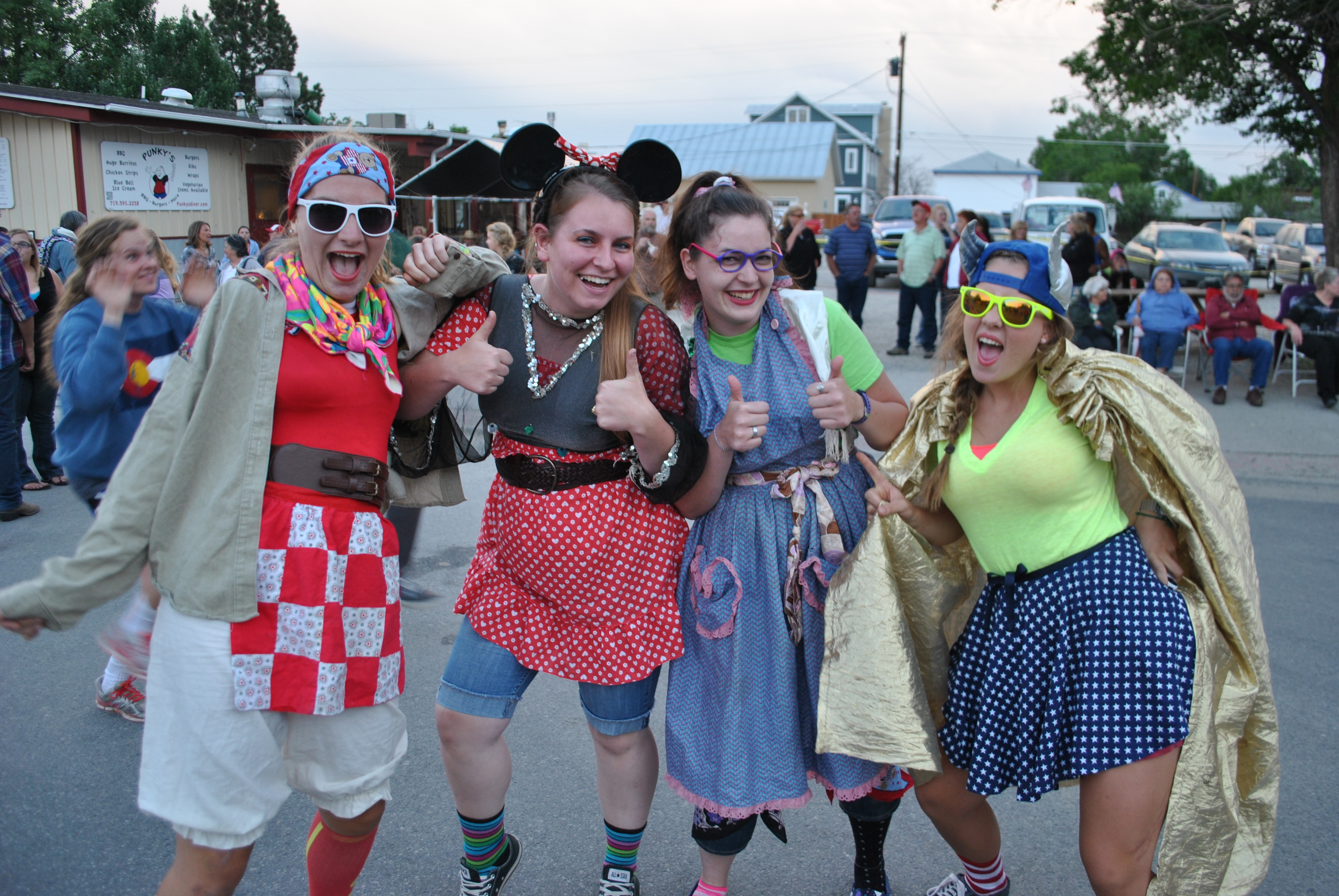
Closing off a large portion of main street, your group classics like the Macarena and YMCA would prompt dancing, as well as the few country songs that led into line dances.  Families were dancing, the 20-somethings that were working the camps twirled and bounced their way around the street, which was dedicated the ‘dance-floor’. People walked by with icecream from the local restaurant that would give out gift certificates for the small competitions that took place throughout the event.

Image

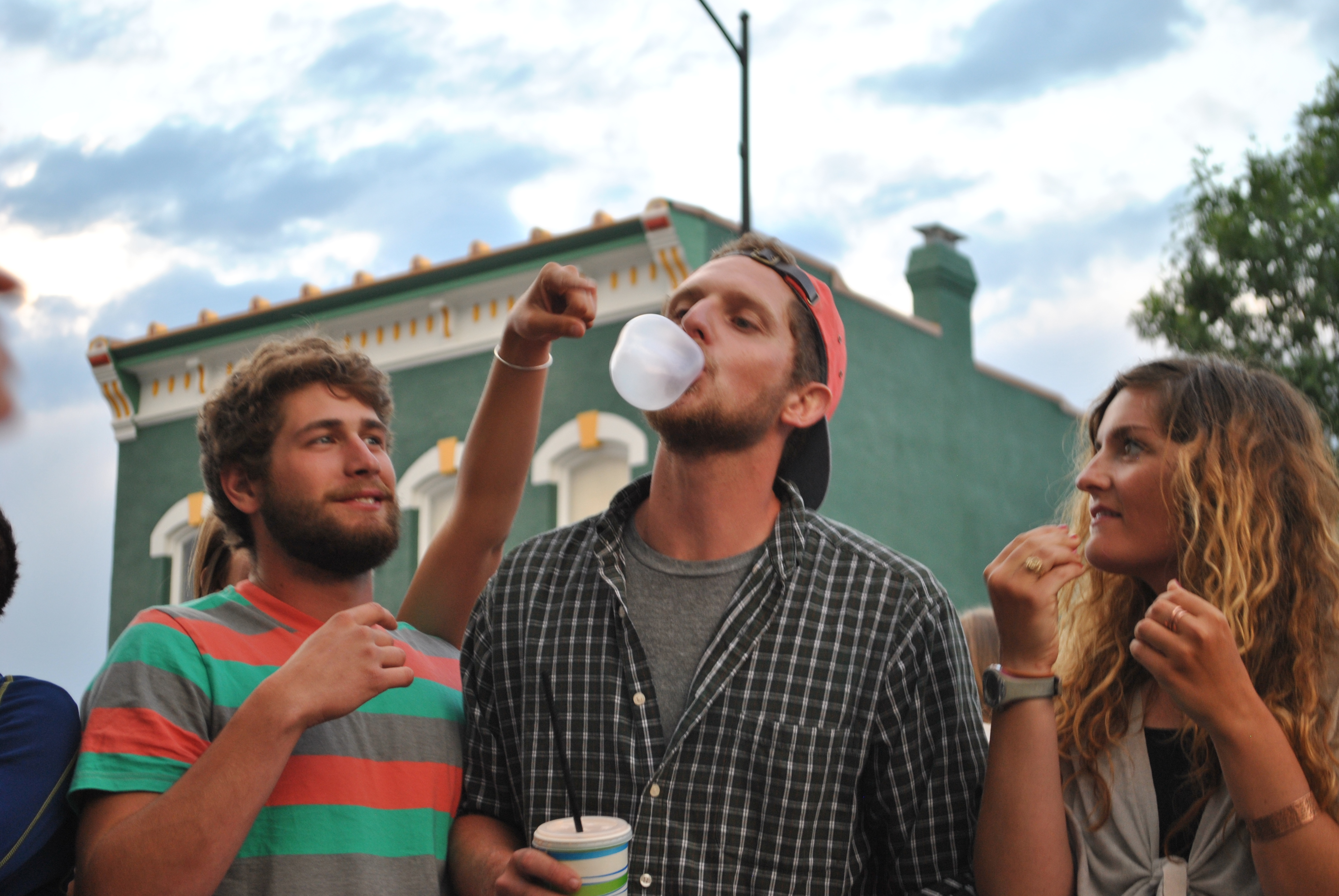
(Contestants of the bubble blowing contest)

I had lived here for a couple years back in High School. First time in a public school and had a graduating class of 75, and football games were a town event. My summers were spent waitressing and helping out at one of the summer camps with some wonderful people I still keep in touch with. But tonight it hit me – If I weren’t from little ol’ “BV”, and I wanted to just find a fun summer place to work while making my way along the U.S.A., I would choose Buena Vista, no competition.

And all the while, spinning, twirling, bobbing and stomping, the community joined together on main street. The mountains in the backdrop, buildings from the 1800’s flanking you, good music and fresh air, I thought ‘I was so lucky.’

Image

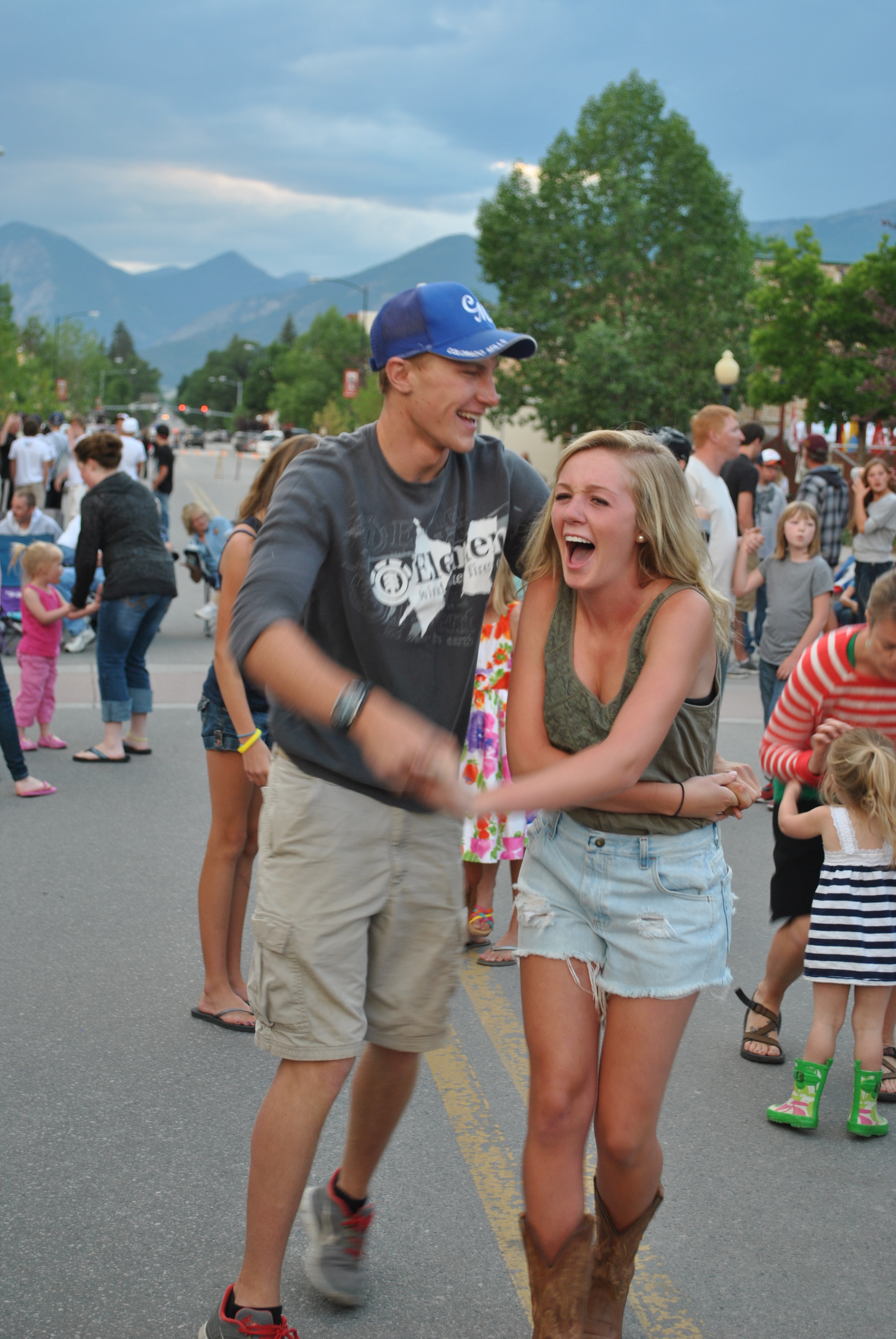
(Swingin’ on the streets)

Image

(Raft guides that got dressed up for the event)

A little Knotty: The Ethnography of a Sailor

Rafting at sunset

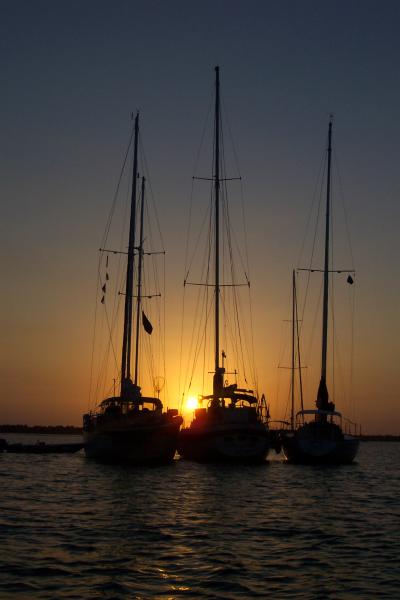
There are multiple sub cultures, just like on land you can have mountain men, and hermits, spanning to high rise condos and mansions. This is the narrower band of culture that I was more deeply immersed in, with homeschooling and family life, and the broader scope of general boating social dynamics.

Sitting at anchor, using the sailing dinghy to get to and from shore, fishing for your dinner and burning candles for light.

Tied to the dock, with the utilities to provide modern comforts, and the car parked in the lot to go down to the shop for fresh veggies for dinner.

Transportation

One of the first questions I get about living on a boat is  “How did you get around without a car?” When living in a marine orientated city, there are many shops and conveyances very close to the water. In this sense the family car is the dinghy.

Shuttling to shore, and walking to your destination, provide an active and healthy lifestyle in addition to saving on petrol costs.  You are also more likely to buy things you need, and cut out junk food and inconsequential items that are not ‘worth’ the effort of hauling back to the boat. Quite frequently, people will have a bike, or small moped, that can be shuttled to shore in the dinghy to use.  In some instances, live-aboards who maintain port at a dock will choose to maintain the comfort of a vehicle for longer trips, and the boat being at dock is for longer term living.

Food and Diet

When living in the middle of the ocean your main sources of food would probably what fish you caught, and the edible seaweeds that you could harvest.  This style of living for long derations, and especially not planned, is rare. The common approach to long term voyages includes detailed planning of routes, studying weather patterns, and stocking up on rations before leaving port.

Before leaving for the Bahamas for 6months, I remember going to the store with my family. We had sat down and planned out what we would need to make each meal, then multiplied it by how many days we would eat that meal and multiplied that to how many meals we would need to ration the whole journey. Leaving out produce and other perishable items that we would buy in the islands, we still had 5 full carts of food to prepare for the journey. We had such a large number of items, they could not be rung up in the same transaction at the register.

Community Structure

The sailing community has three main niches; Marina, the hard (boatyard), and anchor/moored.

The Marina is considered the most social of the three niches. Here the equivalent of a neighborhood is slips along the pier. There is the ‘neighbor dynamic’; The neighbor that offers to help with some maintenance, ‘neighborhood watch’ becomes ‘marina watch’, and there are the conflict neighbors ( e.g. leaving lights on, music too loud, ext.). Marina offices usually provide a central hub to the social dynamic. If the office facilities are highly restricted and hard to access, there will be less interaction in these areas, where as a marina that provides larger free space to its guests will draw more people into the social setting. This would be the equivalent of the “city” of the boater world.
While on the hard, boaters are usually working on their boat, whether its basic maintenance or extreme repairs/renovations. The people that are in this working environment tend to have more of a ‘business’ scene, trying to get the job on their boat done.  The social dynamic of strangers in this environment is more of a friendly passing in the work place. Here it is assumed that people at the yard are doing some form of maintenance, or preparing for storm seasons.   The work yard would be most closely related to the suburb; people going about their business with some interaction, though there is ‘personal space’ associated with the area around the boat in addition to the boat itself. (Leaving a drill under your boat could be seen as the equivalent of leaving your lawn mower on your front lawn, it is assumed that the lawn mower, or in this case, drill, is associated with the property that it shares a space with.)

The ‘rural’ form of living would be at anchor or at mooring. When living with such large amounts of space between boats, interaction is limited. The most common forms of social interaction are particular social events (e.g. dock party on shore, meeting at a boat for cocktails), or spontaneous interactions (e.g. meeting at the dinghy dock en-route to the store).

Education

Families living on boats are often home schooled, allowing for mobility and convenience. With the diverse offering of education programs, there are  self guided work books, satellite ‘Skype-in’ class sessions, and other correspondence curriculum establish that can provide your standard education requirements. However, when living on a boat, there are the opportunities to study biology by dissecting a fish and taking the time to learn the organs, maritime history is common around coastal regions, and  (with homeschooling in general) individual interests can be developed by incorporating them with school work. (Like astronomy? write a paper on how Columbus used stars to navigate. Like electronics and chemistry? Perform an experiment about the conductive properties of salt water.)

The other education alternative presented was enrollment during the school year, leaving summers and holidays to travel. Restricting time allowances for travel usually is associated with leaving the boat at dock for longer periods of time and in many cases results in the family moving back onto land before much traveling takes place.

Waste/toilet

As you can imagine, I’m hitting all of what I think are the no-brainer parts of living on a boat, when a girl I’m talking to asks “this may be gross, but what did you do about going to the bathroom?” I had forgotten all about that naturally human action that is dealt with differently in this living environment.

On a boat the bathrooms are small, usually just large enough to accommodate a small shower and the head (toilet). The toilets are small, and manually flushed by a pump. Once ‘flushed’, the waste goes to a “holding tank” which is emptied by a pump at the dock. The other method of flushing is an Electisan which works like a septic tank, treating the waste for deposit into the ocean. Sink and shower drains have through halls into the water, or into the bildge (the open area under the floor of the boat which usually has a small amount of water) and is pumped out into the ocean.

Other trash should be stored for disposal on land, and organic matter can be disbursed out in the ocean to decompose.